Seckau · Assumption of Mary

Seckau, Austria

About this church

Basilica · Parish and Monastery Church

Significance: Seckau has been a focus of spiritual life since the monastery was founded - the burial place of rhyme chronicler Ottokar and minstrel Ulrich von Liechtenstein.

Special features: art-historically important, regionally important, religiously significant, pilgrimage destination, politically/historically relevant, architecturally special, socio-historically significant

Admission: Basilica: free entry (daily 6 a.m. to 8 p.m.). Exhibition “World of the Monks”: adults approx. €7, groups €6, students €4 (prices according to the monastery, please confirm before visiting)

Accessibility: Yes

Guided tours: Yes

Highlights
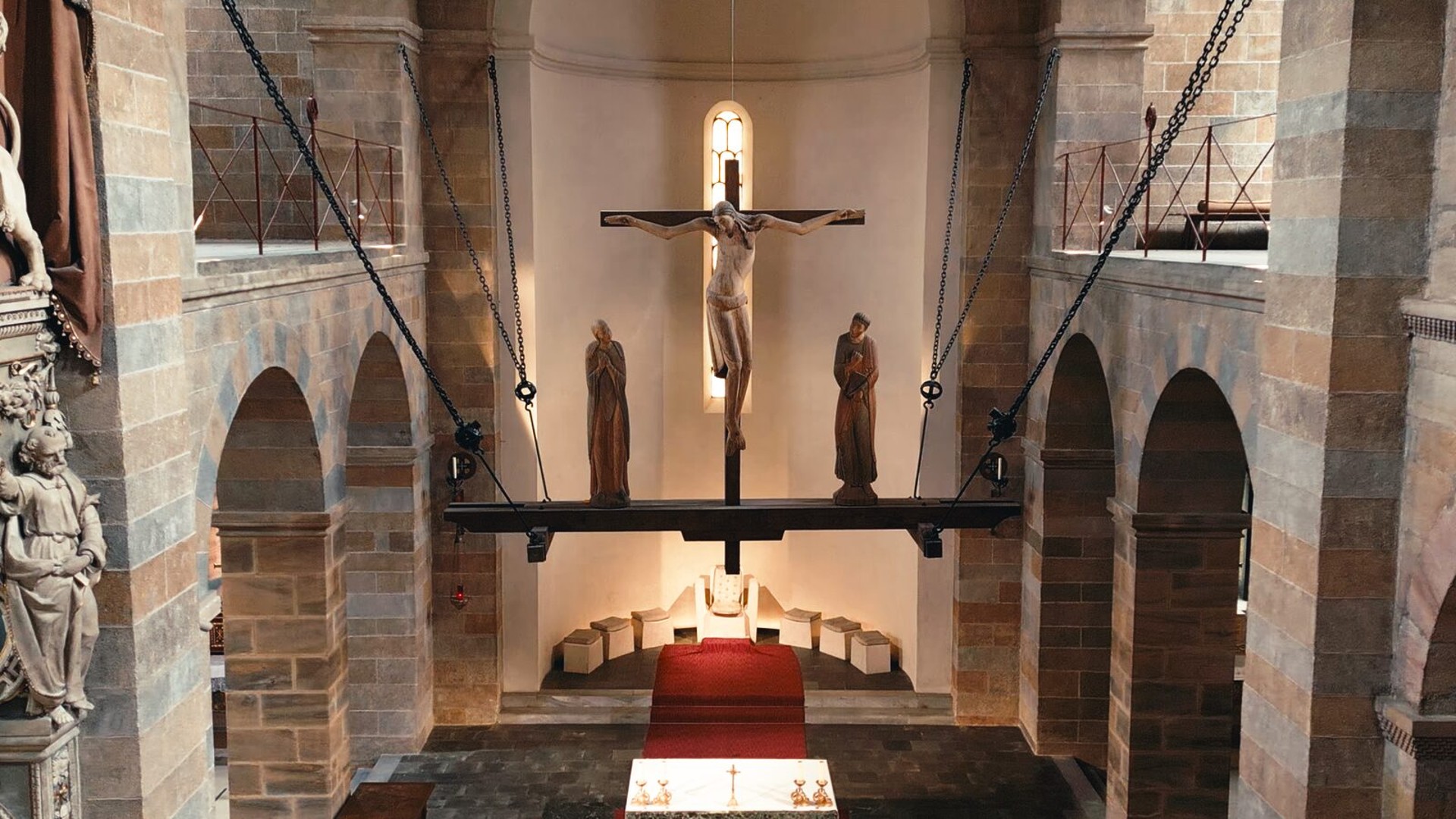
Crucifixion group (rood screen cross) Crucifixion group (rood screen cross)Location: Chancel / Apse Dating: early 13th century (installed in the chancel since 1964) Material/Type: Wood, fully plastic Artist/Manufacturer: unknown The impressive crucifixion group in the apse shows the crucified man with outstretched arms that act like wings and lift the body up. The depiction is one of the most valuable Romanesque rood screen groups in the German cultural area and shows Christ as a sovereign king in the transition to the Gothic style. Installed in the chancel by Clemens Holzmeister in 1964.Read more Seckau miraculous image (Nikopoia) Seckau miraculous image (Nikopoia)Location: Chapel of Grace / North Aisle Dating: 12th century (new version 1950/53) Material/Type: Marble Artist/Manufacturer: Venetian School of Art; New version Br. Bernward Schmid A depiction made of marble shows Mary as an enthroned ruler with the child Jesus. Greek name 'Nikopoia' (bringer of victory). Along with the crucifixion group, it is one of the abbey's most valuable treasures.Read more Trinity Altar / Coronation Altar Trinity Altar / Coronation AltarLocation: Bishop's Chapel / North Aisle Dating: 1489 (consecrated by Provost Johannes Dürnberger) Material/Type: Carved wood Artist/Manufacturer: South Tyrolean workshop Depiction of the Holy Trinity with three crowned heads from one body, which together carry out the coronation of Mary. Figure of Mary surrounded by 8 angels. Double circle with Christ's family tree. Predella shows the donor, Provost Dürnberger.Read more Seckau Apocalypse (angel chapel / Boeckl frescoes) Seckau Apocalypse (angel chapel / Boeckl frescoes)Location: Angel Chapel / North Aisle Dating: 1952–1960 Material/Type: Fresco cycle Artist / manufacturer: Herbert Boeckl Scenes from the Revelation of John by Herbert Boeckl. It is one of the most important works of Austrian sacred art since 1945. It owes its creation to the visionary Abbot Benedikt Reetz.Read more Habsburg mausoleum Habsburg mausoleumLocation: North aisle / eastern part Dating: 1572–1612 Material/Type: Various (stone, stucco, painting, marble, damask) Artists / Manufacturers: Sebastian Carlone, Alexander de Verda, Theodor Ghisi Charles II had a mausoleum built in barrier architecture in two separate bays, raised by 5 steps. Stage-like scenery with the Habsburg coat of arms and the coats of arms of the 23 hereditary countries. Cenotaph made of wine-red mottled marble.Read more Renaissance cloister Renaissance cloisterLocation: South of the basilica Dating: 1588 Material/type: Seckauer sandstone, two-story Artist / manufacturer: Bernhard da Silvo (design) Two-story building made of Seckau sandstone. During renovation in 1966/67, significant remains of the Romanesque building were discovered and preserved.Read more Cross altar Cross altarLocation: South aisle Dating: 1523 Material/type: wood, combination of late Gothic/early Renaissance Artist/Manufacturer: Provost Gregor Schärdinger Foundation Three-part work that combines Gothic winged altar form with Renaissance elements.Read more
StoryFounding legendRead more dedicationdedicationRead more Renovations & extensionsRenovations & extensionsRead more Special storySpecial storyRead more
Crucifixion group (rood screen cross)

Crucifixion group (rood screen cross)

Location: Chancel / Apse
Dating: early 13th century (installed in the chancel since 1964)
Material/Type: Wood, fully plastic
Artist/Manufacturer: unknown
The impressive crucifixion group in the apse shows the crucified man with outstretched arms that act like wings and lift the body up. The depiction is one of the most valuable Romanesque rood screen groups in the German cultural area and shows Christ as a sovereign king in the transition to the Gothic style. Installed in the chancel by Clemens Holzmeister in 1964.
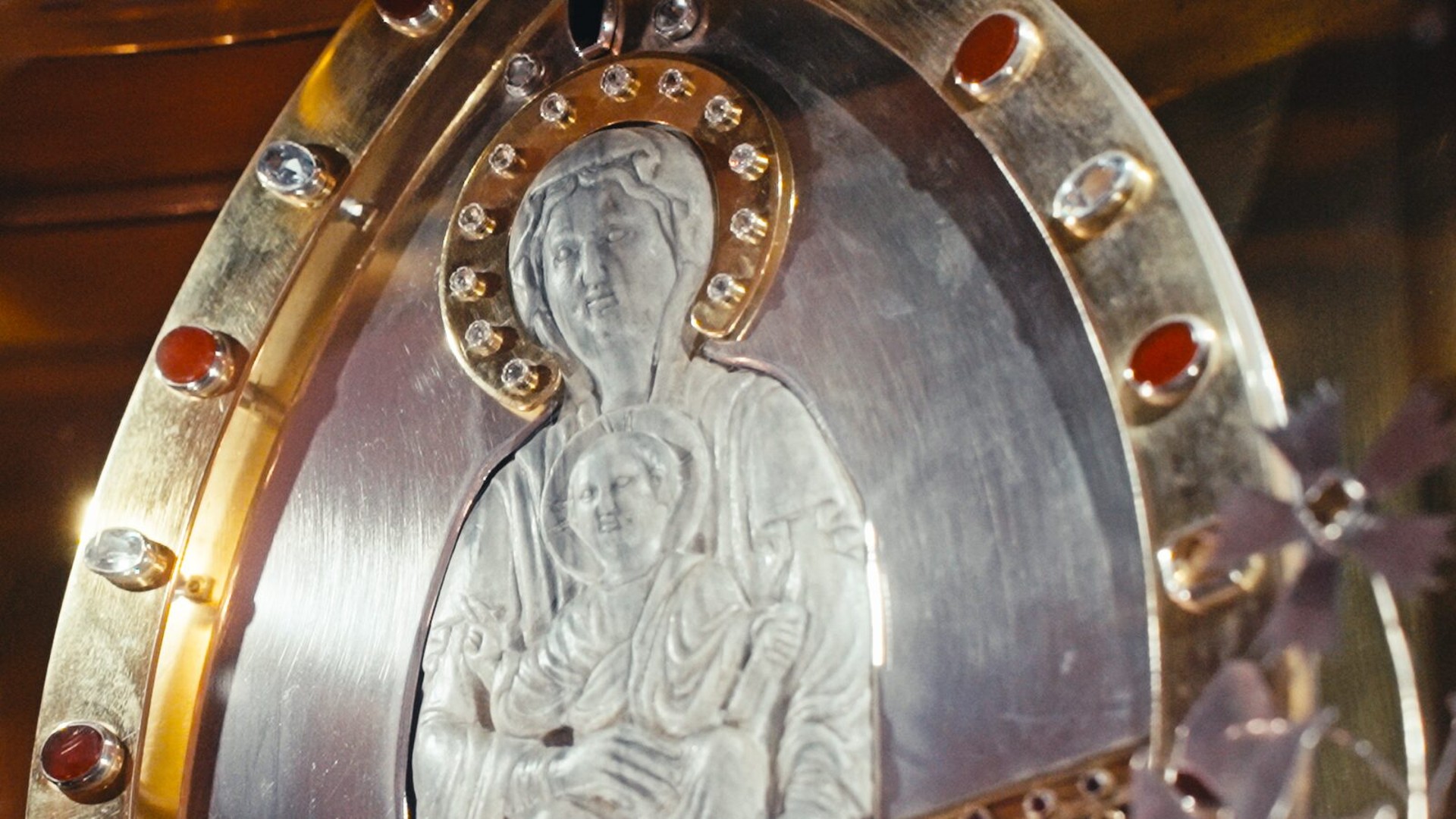
Seckau miraculous image (Nikopoia)

Seckau miraculous image (Nikopoia)

Location: Chapel of Grace / North Aisle
Dating: 12th century (new version 1950/53)
Material/Type: Marble
Artist/Manufacturer: Venetian School of Art; New version Br. Bernward Schmid
A depiction made of marble shows Mary as an enthroned ruler with the child Jesus. Greek name 'Nikopoia' (bringer of victory). Along with the crucifixion group, it is one of the abbey's most valuable treasures.
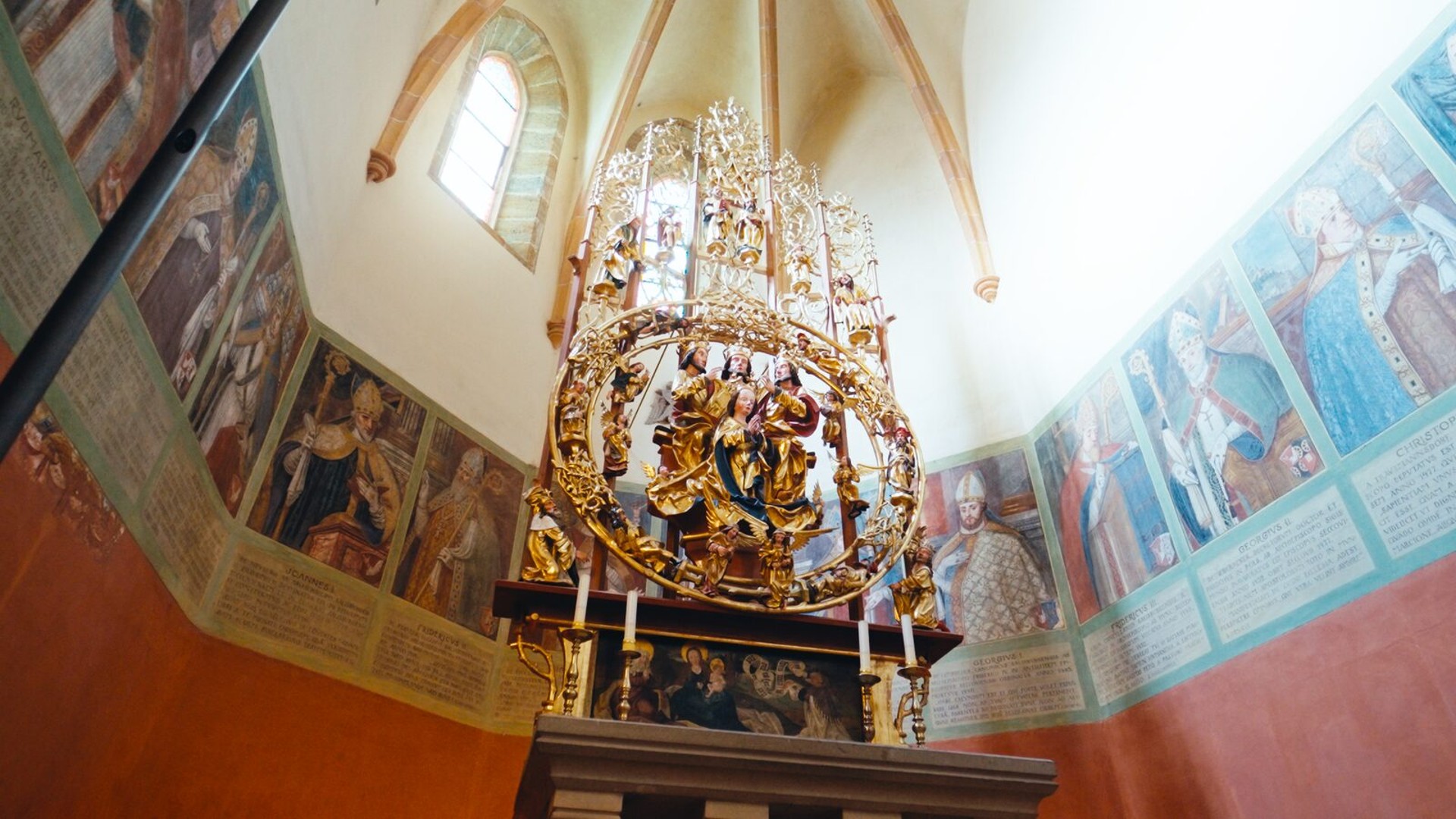
Trinity Altar / Coronation Altar

Trinity Altar / Coronation Altar

Location: Bishop's Chapel / North Aisle
Dating: 1489 (consecrated by Provost Johannes Dürnberger)
Material/Type: Carved wood
Artist/Manufacturer: South Tyrolean workshop
Depiction of the Holy Trinity with three crowned heads from one body, which together carry out the coronation of Mary. Figure of Mary surrounded by 8 angels. Double circle with Christ's family tree. Predella shows the donor, Provost Dürnberger.
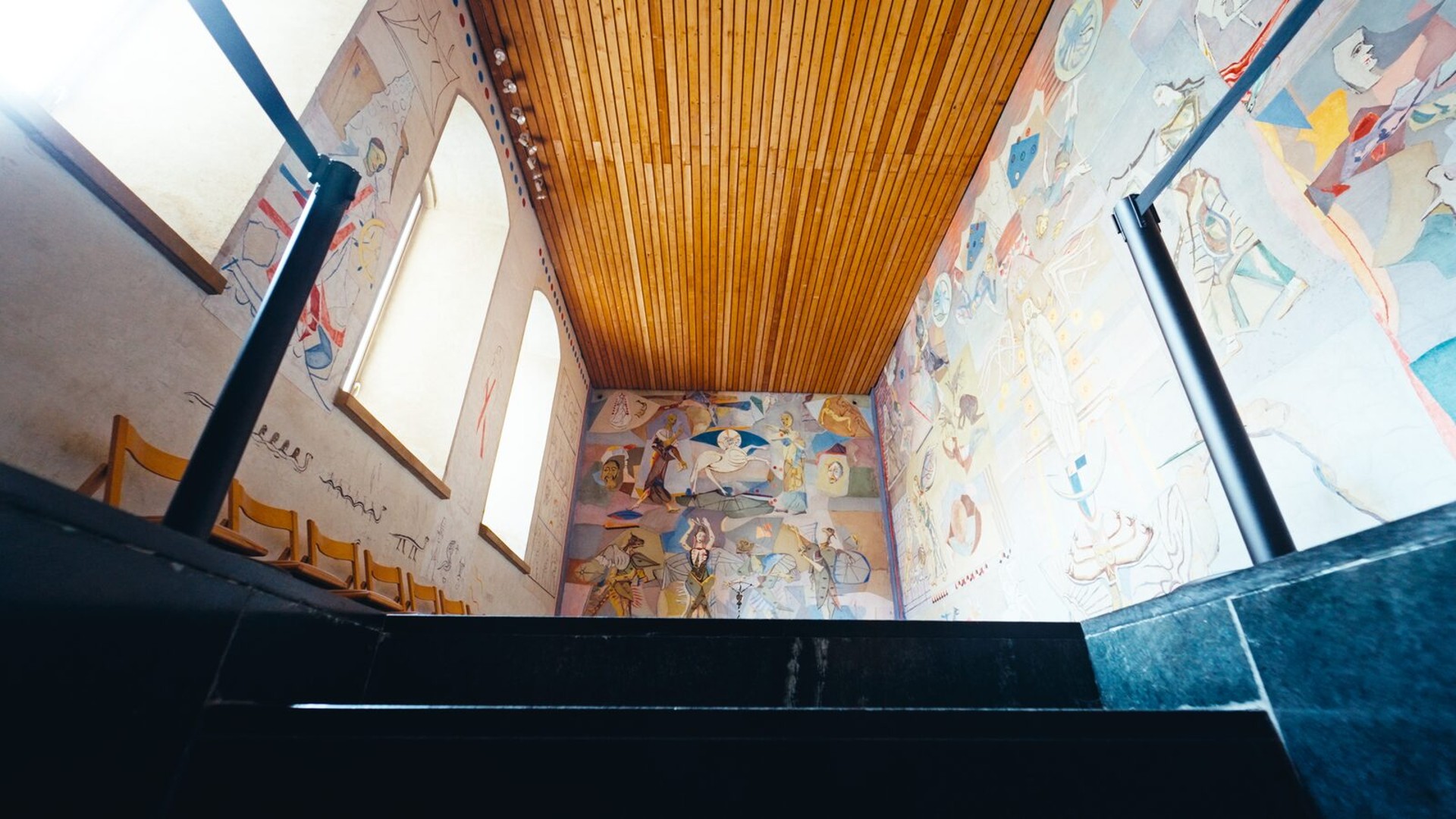
Seckau Apocalypse (angel chapel / Boeckl frescoes)

Seckau Apocalypse (angel chapel / Boeckl frescoes)

Location: Angel Chapel / North Aisle
Dating: 1952–1960
Material/Type: Fresco cycle
Artist / manufacturer: Herbert Boeckl
Scenes from the Revelation of John by Herbert Boeckl. It is one of the most important works of Austrian sacred art since 1945. It owes its creation to the visionary Abbot Benedikt Reetz.
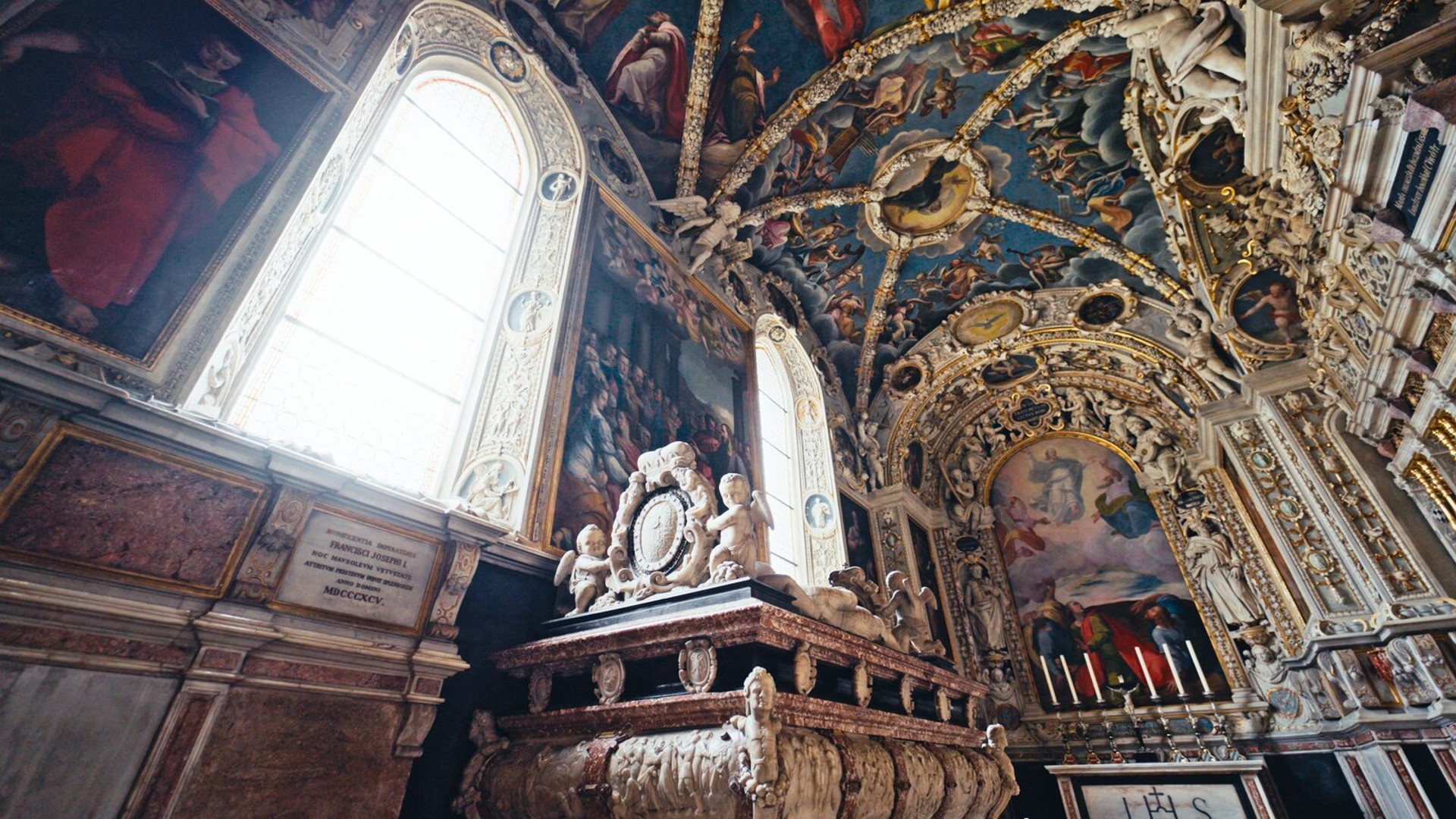
Habsburg mausoleum

Habsburg mausoleum

Location: North aisle / eastern part
Dating: 1572–1612
Material/Type: Various (stone, stucco, painting, marble, damask)
Artists / Manufacturers: Sebastian Carlone, Alexander de Verda, Theodor Ghisi
Charles II had a mausoleum built in barrier architecture in two separate bays, raised by 5 steps. Stage-like scenery with the Habsburg coat of arms and the coats of arms of the 23 hereditary countries. Cenotaph made of wine-red mottled marble.
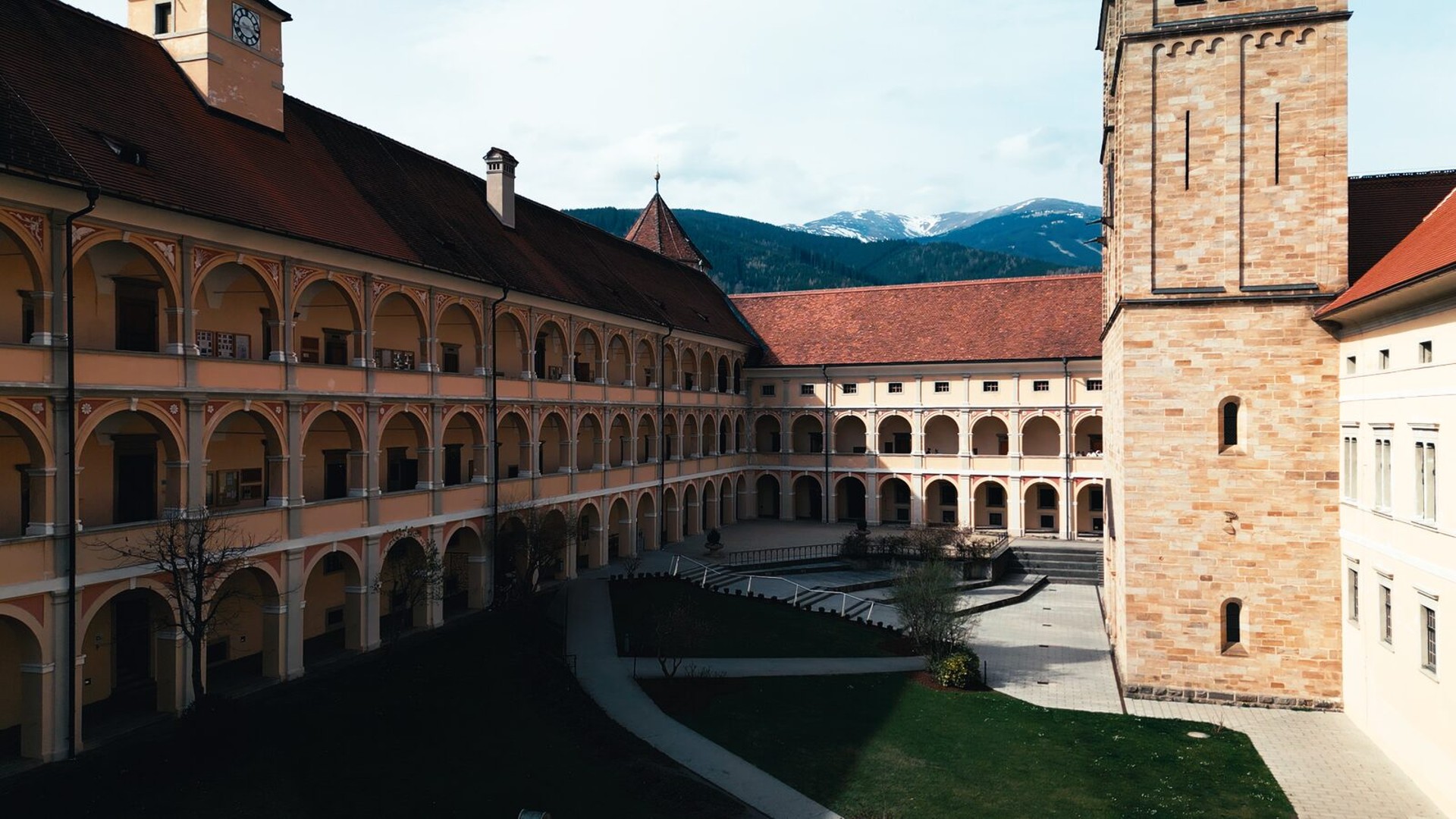
Renaissance cloister

Renaissance cloister

Location: South of the basilica
Dating: 1588
Material/type: Seckauer sandstone, two-story
Artist / manufacturer: Bernhard da Silvo (design)
Two-story building made of Seckau sandstone. During renovation in 1966/67, significant remains of the Romanesque building were discovered and preserved.
Cross altar

Cross altar

Location: South aisle
Dating: 1523
Material/type: wood, combination of late Gothic/early Renaissance
Artist/Manufacturer: Provost Gregor Schärdinger Foundation
Three-part work that combines Gothic winged altar form with Renaissance elements.
Story

Story

Founding legend

In 1142, Adalram von Waldeck went hunting in the forests of the Seckau plateau and followed a magnificent stag. Exhausted, he fell asleep and in his dream saw Mary in bright light, calling out to him 'Hic seca!' - 'Fall here!' He felled the next tree and a stone image of the Virgin Mary fell towards him - the miraculous image of Seckau.

dedication

dedication

Original altar dedicated to the Three Kings; Mary as 'house patron' - Seckau miraculous image

Renovations & extensions

Renovations & extensions

1218: Establishment of the suffragan diocese of Seckau by Archbishop Eberhard II, church becomes cathedral church, vestibule added
1259: Devastating fire devastates the monastery and Romanesque wooden ceiling; Gothic cloister is created afterwards
1332: Letter of indulgence from Pope John XXII. for believers in the Seckau diocese when venerating the miraculous image
1590: Burial of Archduke Charles II in the mausoleum of the basilica
1625–1628: Completion of the Renaissance building of the monastery complex with a three-story 100m arcade
1782: The monastery was abolished by Emperor Joseph II after 640 years; Decay, deportation of books and art treasures
1883: Repopulation by Beuron Benedictine monks on September 8th
1886: Collapse of the north tower, destruction of part of the north wing
1893: Completion of new church towers in neo-Romanesque style; Extension by 2 bays to the east
1952–1960: Boeckl frescoes in the Angel Chapel
1964: Redesign of the chancel by Clemens Holzmeister
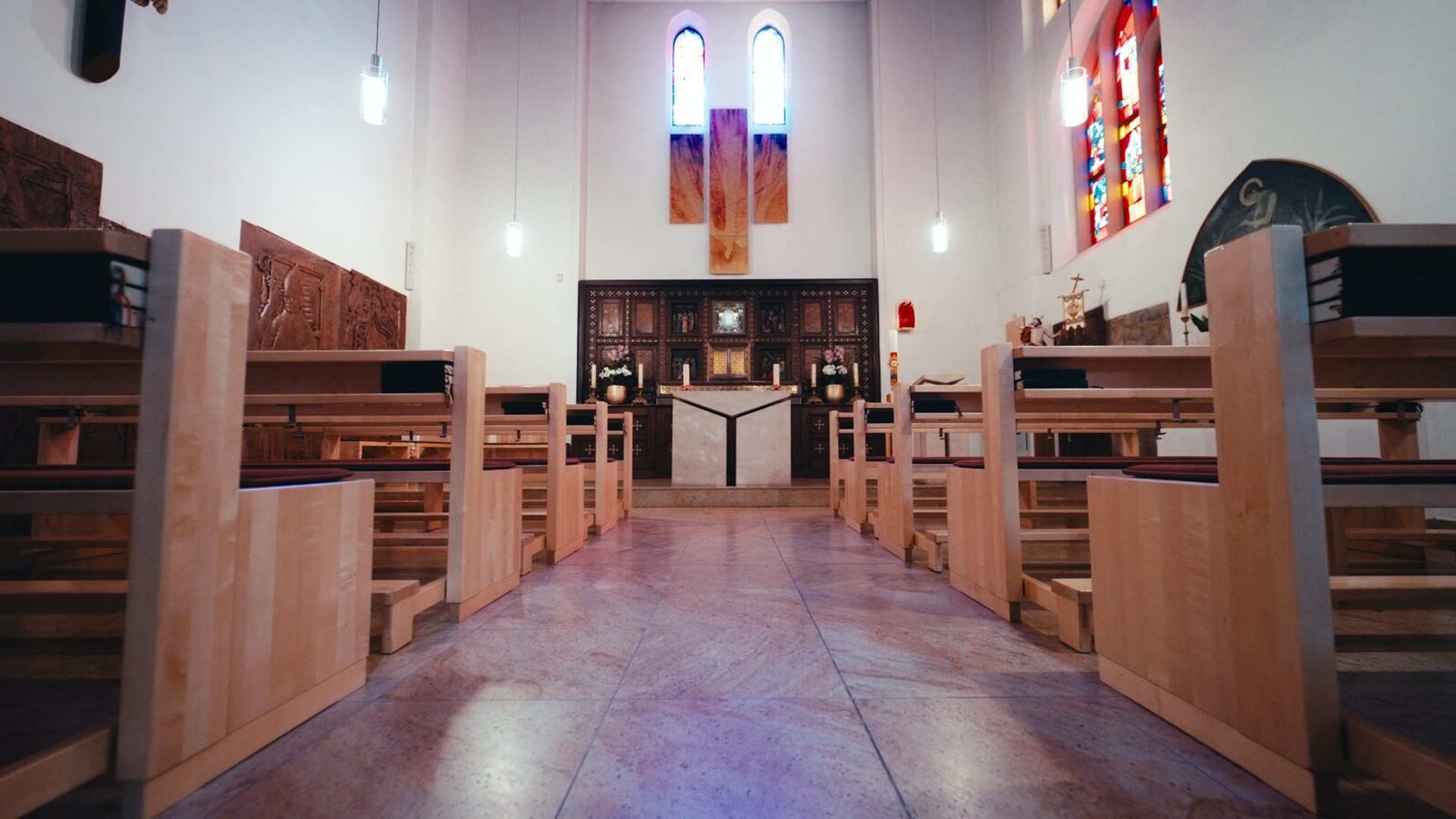
2017/18: Interior restoration on the occasion of the 800th anniversary of the diocese; new stone floor, lighting technology

Special story

Special story

Founding legend: Adalram von Waldeck went hunting in the forests of the Seckau plateau in 1142 and followed a magnificent deer. Exhausted, he fell asleep and in his dream saw Mary in bright light, calling out to him 'Hic seca!' - 'Fall here!' He felled the next tree and a stone image of the Virgin Mary fell towards him - the miraculous image of Seckau.
1259: Devastating monastery fire
1883: Repopulation by Beuron Benedictine monks
1886: Collapse of the north tower

Audio guide

Origin & History – From the dream of a nobleman to the cathedral in the mountains1:57
The Vestibule – Where Justice Was Done1:15
The star rib vault – a sky made of stone1:13
The Seckau miraculous image – the bringer of victory1:21
The Crucifixion Group – The King on the Cross1:39
The Habsburg Mausoleum – power, death and resurrection1:40
The Boeckl Apocalypse - vision of a small chapel1:36
The organ – three thousand pipes, one sound1:35
The cloister & chapter house – layers of time1:38

Sign in