Thal · St. James

Thal, Austria

About this church

Parish and pilgrimage church · a total work of art of Fantastic Realism

Significance: West Styrian Way of St. James (starting point); New building 1992–1994; Fantastic Realism (Prof. Ernst Fuchs); Heavenly Jerusalem

Special features: pilgrimage destination; religiously significant; architecturally special; Total work of art Prof. Ernst Fuchs; Fantastic realism

Admission: Free (a donation is requested for the church)

Accessibility: Not specified

Guided tours: Yes

Highlights
The entrance The entranceLocation: Entrance area of the church Dating: 1992–1994 Material/Type: Stone and Marble Artist/Manufacturer: Prof. Ernst Fuchs At the entrance two angels welcome the visitors; the eye of God watches over them. The door handles in the shape of ram horns refer to the Lamb of God: whoever enters should “understand” Jesus in order to be “seized” by him.Read more Connection heaven and earth Connection heaven and earthLocation: Outdoor area, halfway to the church Dating: 1992–1994 Artist/Manufacturer: Prof. Ernst Fuchs An outdoor design element that addresses the questions “What am I, where do I come from and where am I going?” The architectural design has a vanishing point to the earth.Read more Interior entrance area Interior entrance areaLocation: Interior, entrance area Material/Type: Murano glass Colored Murano glass characterizes the entrance to the house of God. It symbolizes Aaron's rod with almond blossoms - a sign that you can rely on God's guidance.Read more Acanthus plant in the roof structure Acanthus plant in the roof structureLocation: Main beam of the roof structure The symbol on the main beams of the roof structure is the acanthus. It stands as a reference to the water of life: Even those who have been away from God for a long time can turn to His love and find eternal life.Read more The roof structure The roof structureLocation: Ceiling area of the church interior The roof structure is designed as a sky tent. Its shape and the rainbow colors indicate the covenant tent, which is intended to express the love between God and people.Read more The altar The altarLocation: Center of the church interior Material/Type: Glass with Swarovski elements Designed in the center of the room in crystalline form, the altar is a spiritual expression of the heavenly Jerusalem. Swarovski elements are built into the altar.Read more Benches BenchesLocation: church interior The benches point to human dignity: They show that God meets people on an equal level and provides each individual with a throne, so to speak.Read more Calling of the disciples Calling of the disciplesLocation: to the right of the altar Shows the calling of the disciples at the Sea of Galilee. The picture was created by the artist over several years in a multi-layered painting style in order to increase its expressiveness.Read more Transfiguration of the Lord on Mount Tabor Transfiguration of the Lord on Mount TaborLocation: left of the altar Shows the transfiguration of Jesus on Mount Tabor. The artist gives the viewer a riddle: St. James was assigned three arms as an invitation not only to look at the picture, but also to think about it.Read more
StoryA path between stone and crystalRead more dedicationdedicationRead more Renovations & extensionsRenovations & extensionsRead more Special storySpecial storyRead more
The entrance

The entrance

Location: Entrance area of the church
Dating: 1992–1994
Material/Type: Stone and Marble
Artist/Manufacturer: Prof. Ernst Fuchs
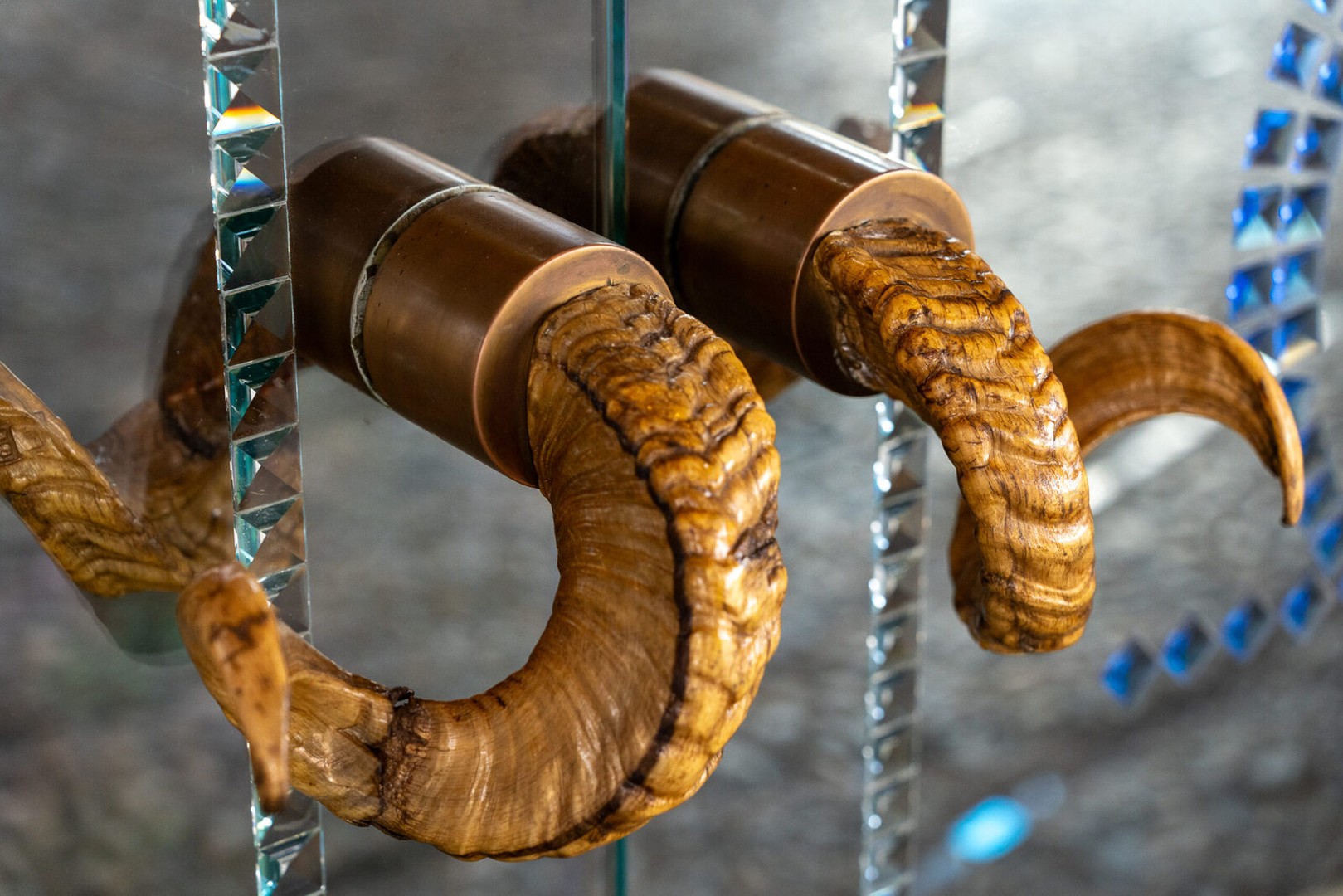
At the entrance two angels welcome the visitors; the eye of God watches over them. The door handles in the shape of ram horns refer to the Lamb of God: whoever enters should “understand” Jesus in order to be “seized” by him.
Connection heaven and earth

Connection heaven and earth

Location: Outdoor area, halfway to the church
Dating: 1992–1994
Artist/Manufacturer: Prof. Ernst Fuchs
An outdoor design element that addresses the questions “What am I, where do I come from and where am I going?” The architectural design has a vanishing point to the earth.
Interior entrance area

Interior entrance area

Location: Interior, entrance area
Material/Type: Murano glass
Colored Murano glass characterizes the entrance to the house of God. It symbolizes Aaron's rod with almond blossoms - a sign that you can rely on God's guidance.
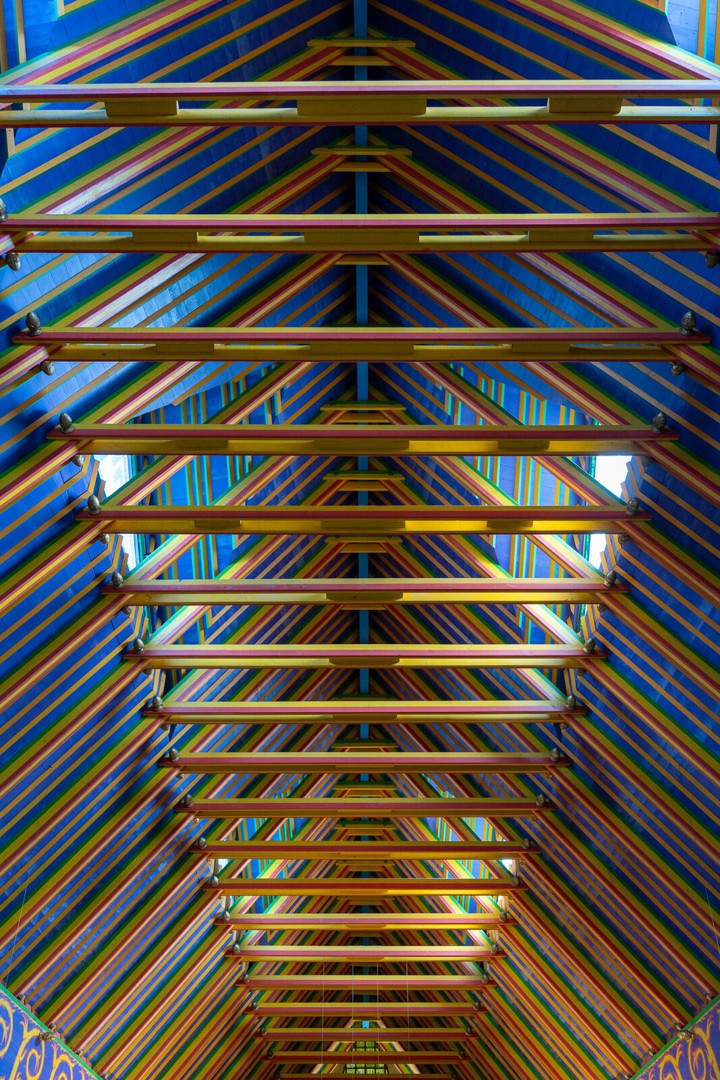
Acanthus plant in the roof structure

Acanthus plant in the roof structure

Location: Main beam of the roof structure
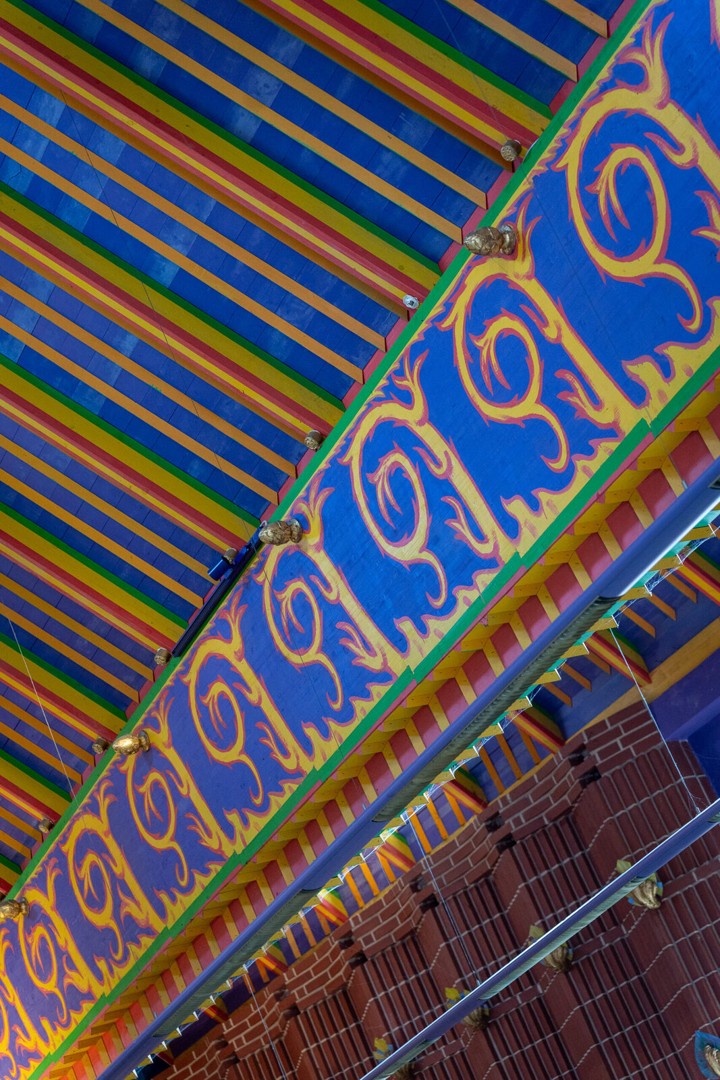
The symbol on the main beams of the roof structure is the acanthus. It stands as a reference to the water of life: Even those who have been away from God for a long time can turn to His love and find eternal life.
The roof structure

The roof structure

Location: Ceiling area of the church interior
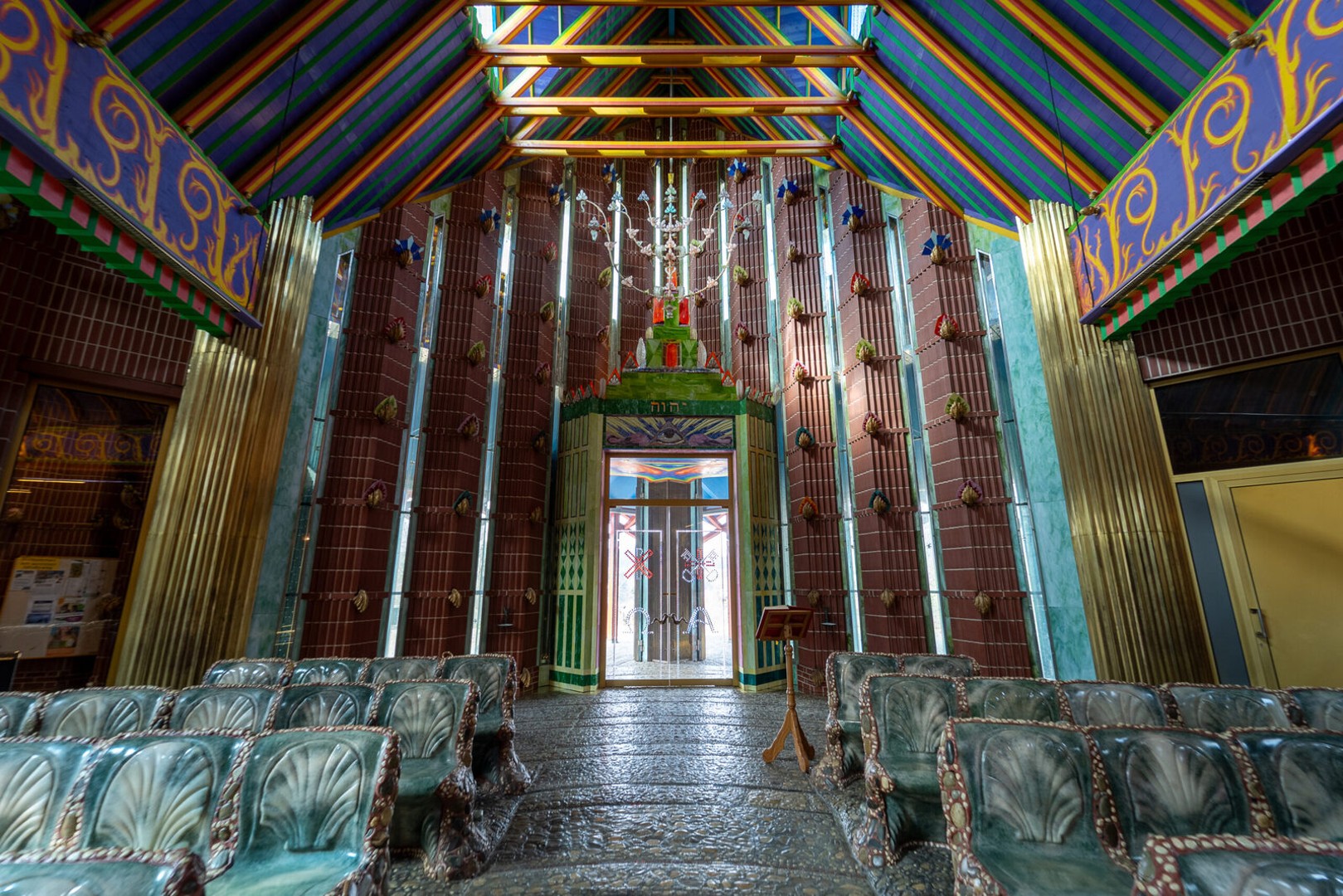
The roof structure is designed as a sky tent. Its shape and the rainbow colors indicate the covenant tent, which is intended to express the love between God and people.
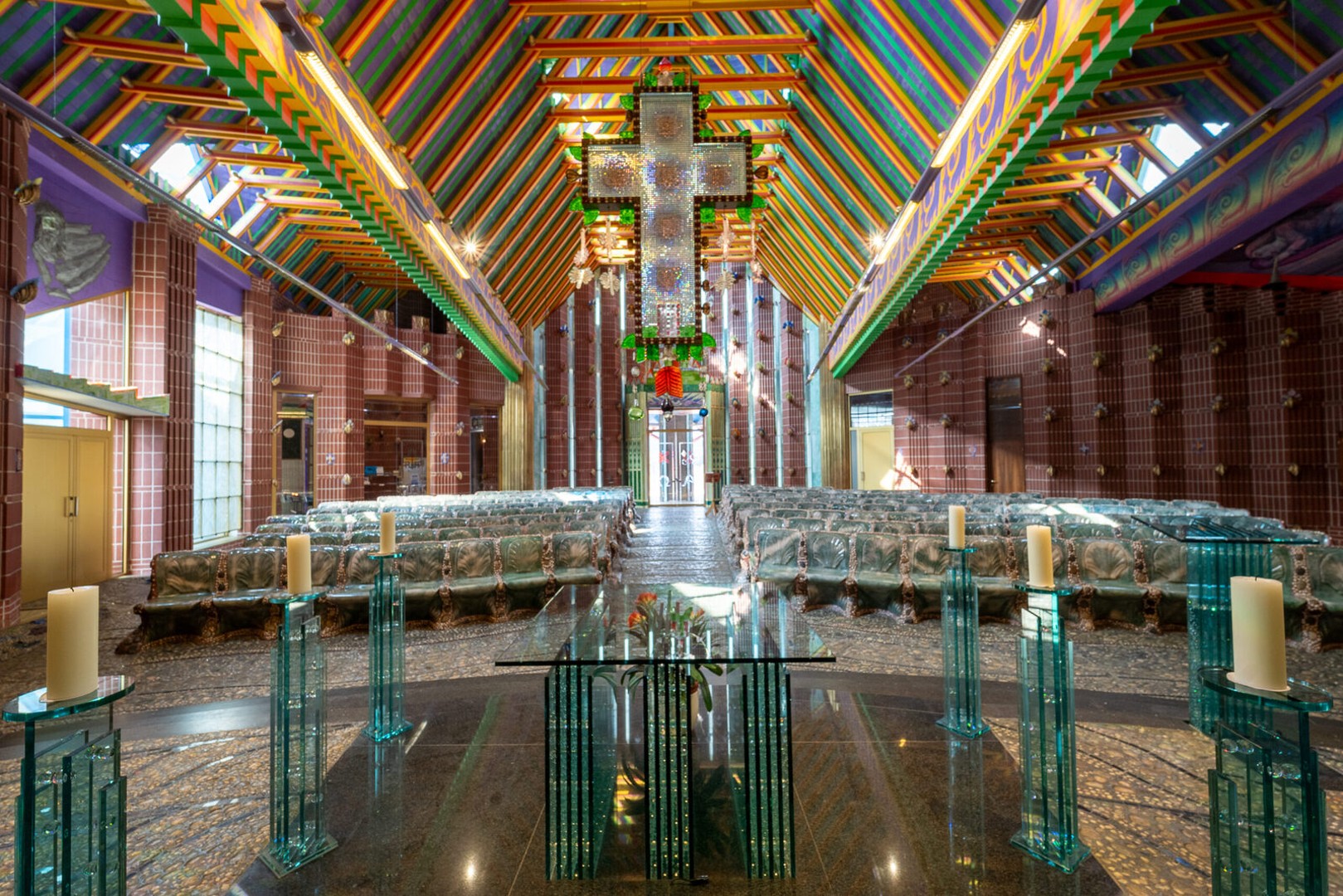
The altar

The altar

Location: Center of the church interior
Material/Type: Glass with Swarovski elements
Designed in the center of the room in crystalline form, the altar is a spiritual expression of the heavenly Jerusalem. Swarovski elements are built into the altar.
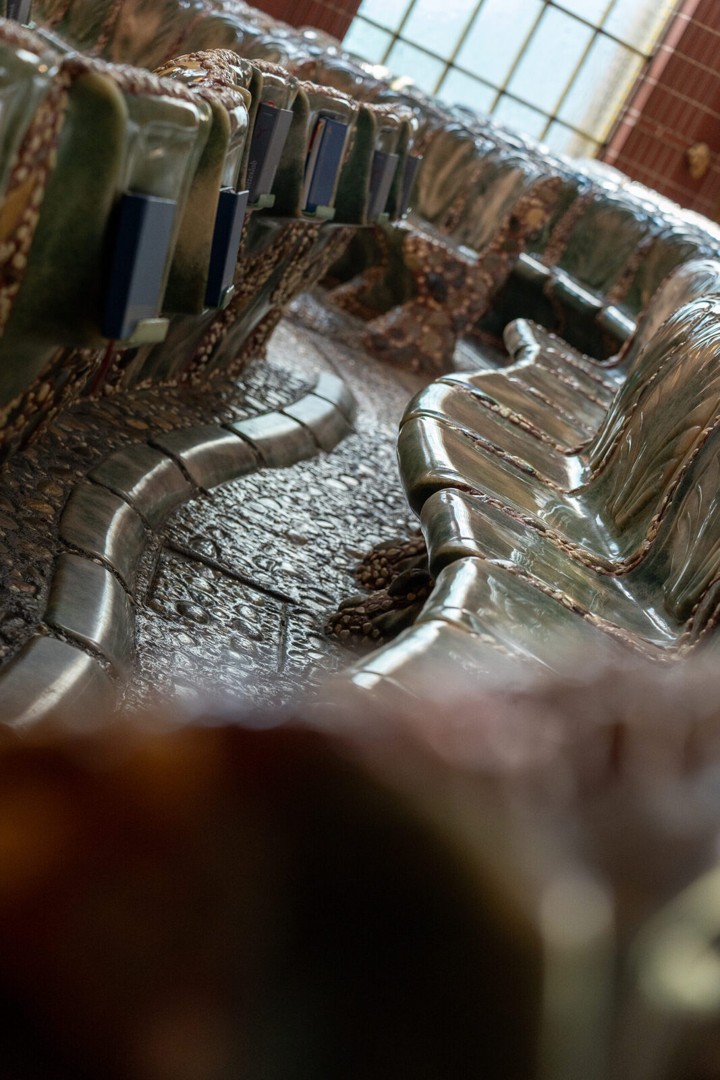
Benches

Benches

Location: church interior
The benches point to human dignity: They show that God meets people on an equal level and provides each individual with a throne, so to speak.
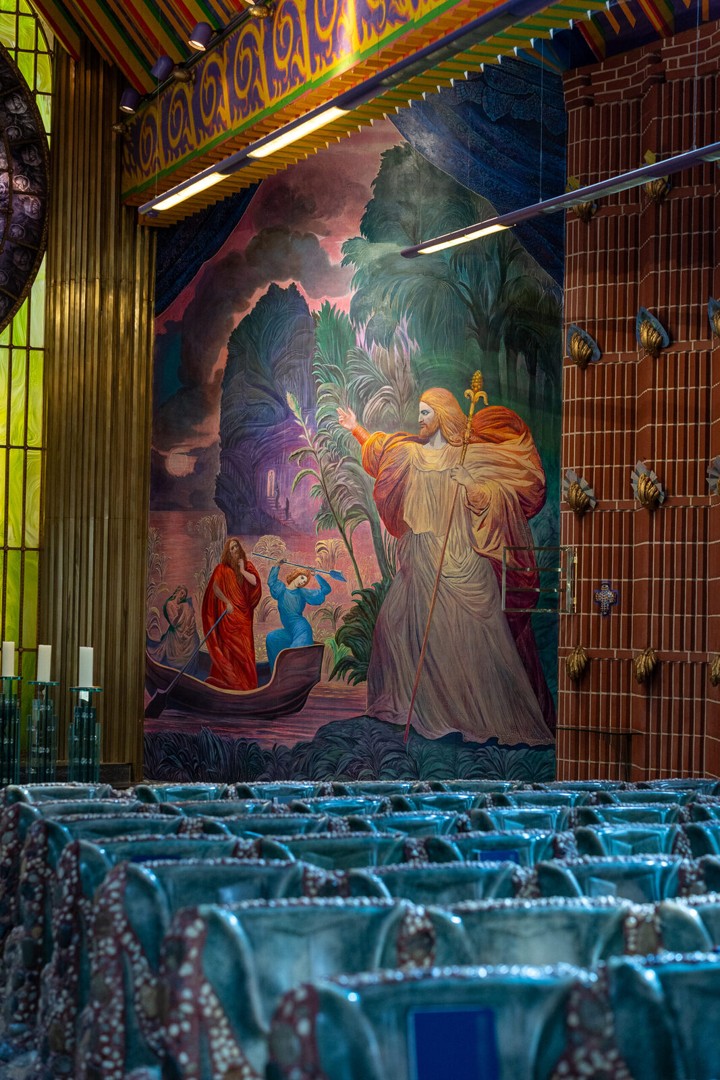
Calling of the disciples

Calling of the disciples

Location: to the right of the altar
Shows the calling of the disciples at the Sea of Galilee. The picture was created by the artist over several years in a multi-layered painting style in order to increase its expressiveness.
Transfiguration of the Lord on Mount Tabor

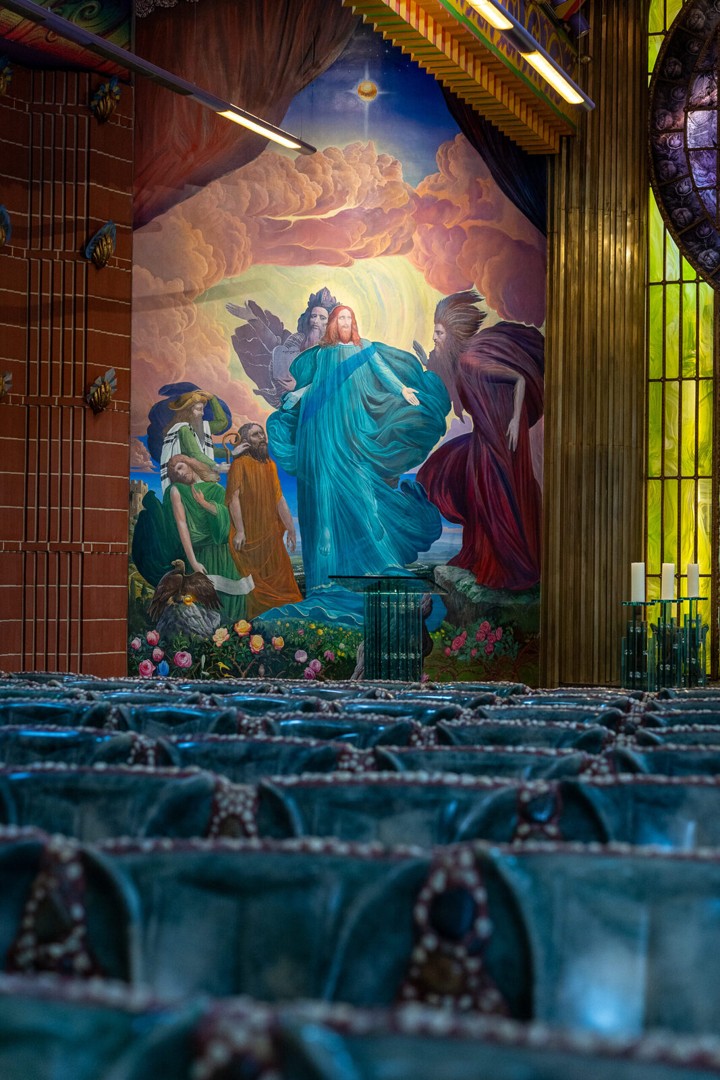
Transfiguration of the Lord on Mount Tabor

Location: left of the altar
Shows the transfiguration of Jesus on Mount Tabor. The artist gives the viewer a riddle: St. James was assigned three arms as an invitation not only to look at the picture, but also to think about it.
Story

Story

A path between stone and crystal

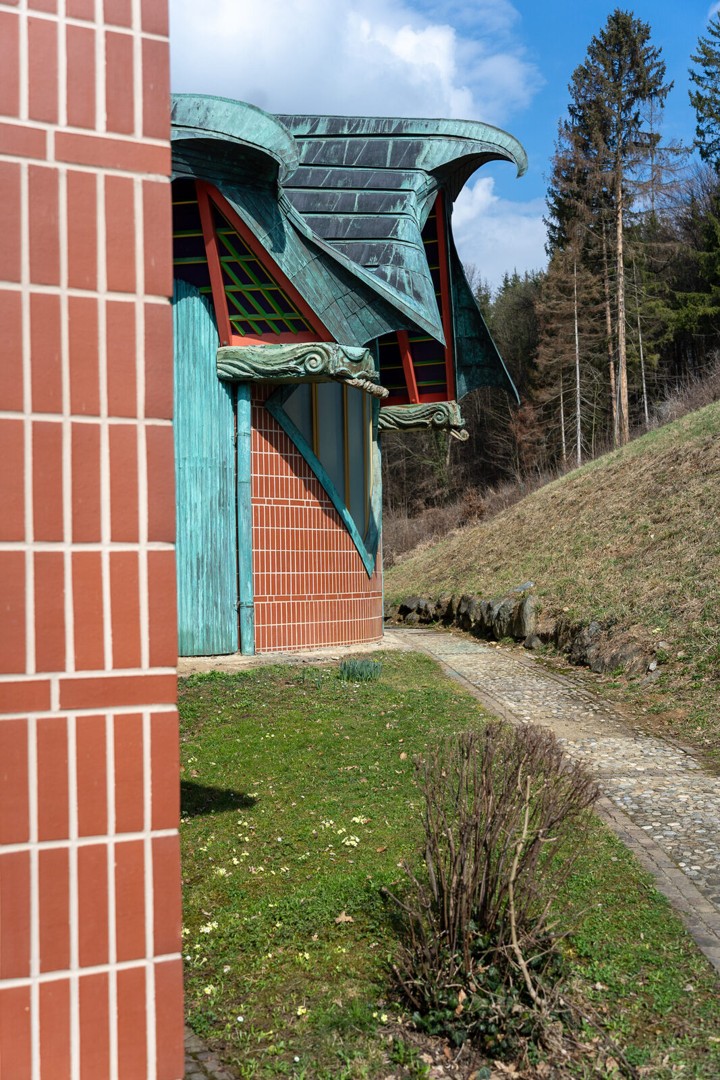
The Thaler Jakobuskirche is located in Thal near Graz and was built between 1992 and 1994. Due to the listed status of the existing old church, a new, larger building was built that integrates the old structure; the tower of the original church was preserved and connects the past with the present.
The church is dedicated to St. James - a pilgrim. The West Styrian Way of St. James begins from here, which is part of a larger European pilgrim route network to Santiago de Compostela. The artistic design comes from Prof. Ernst Fuchs and is based on fantastic realism; The central theme is the Heavenly Jerusalem, implemented in an abstract, crystalline formal language.
The idea for this church came about during the artist's meditation at the Sea of ​​Galilee; the stones and waves seen there became design inspiration. The construction was supported by thousands of hours of voluntary work by the people of Thaler, who, among other things, sorted the stones according to size, shape and color.

dedication

dedication

Saint James the Elder, patron of pilgrims and travelers.

Renovations & extensions

Renovations & extensions

1992–1994: New construction of a larger church building incorporating the listed old church; The tower of the old church was retained and integrated into the new building.

Special story

Special story

The planning of the church came about during a meditation by the artist Prof. Ernst Fuchs on the Sea of ​​Galilee; the stones and waves seen there became design inspiration.
The construction was supported by thousands of voluntary hours of work by the Thaler population; The stones were sorted by the residents themselves according to size, shape and color.
At the entrance two angels welcome the visitors, the eye of God watches over them; The door handles in the shape of ram's horns refer to the Lamb of God - whoever enters should "understand" Jesus in order to be "seized" by him.
Saint James is depicted with three arms in the image of the Transfiguration of the Lord on Mount Tabor - a contemplative puzzle deliberately designed by the artist.
The church is the starting point of the West Styrian pilgrimage route, which is part of the network of pilgrimage routes to Santiago de Compostela.

Audio guide

Origin & History1:42
The entrance0:59
Connection heaven and earth0:58
Interior entrance area0:56
Acanthus plant in the roof structure0:49
The roof structure0:51
The altar1:09
The benches0:36
The calling of the disciples0:46
The Transfiguration of the Lord on Mount Tabor0:50

Videos

Discover Thal · St. James

Sign in