Mariatrost · Mariatrost Basilica

Graz, Austria

About this church

Basilica · pilgrimage church

Significance: Styria's second largest pilgrimage church after Mariazell - papal basilica since 1999, with a statue of grace from the 15th century.

Special features: important in terms of art history, regional history, religious significance, pilgrimage destination, architecturally special

Accessibility: Not specified

Guided tours: Not specified

Highlights
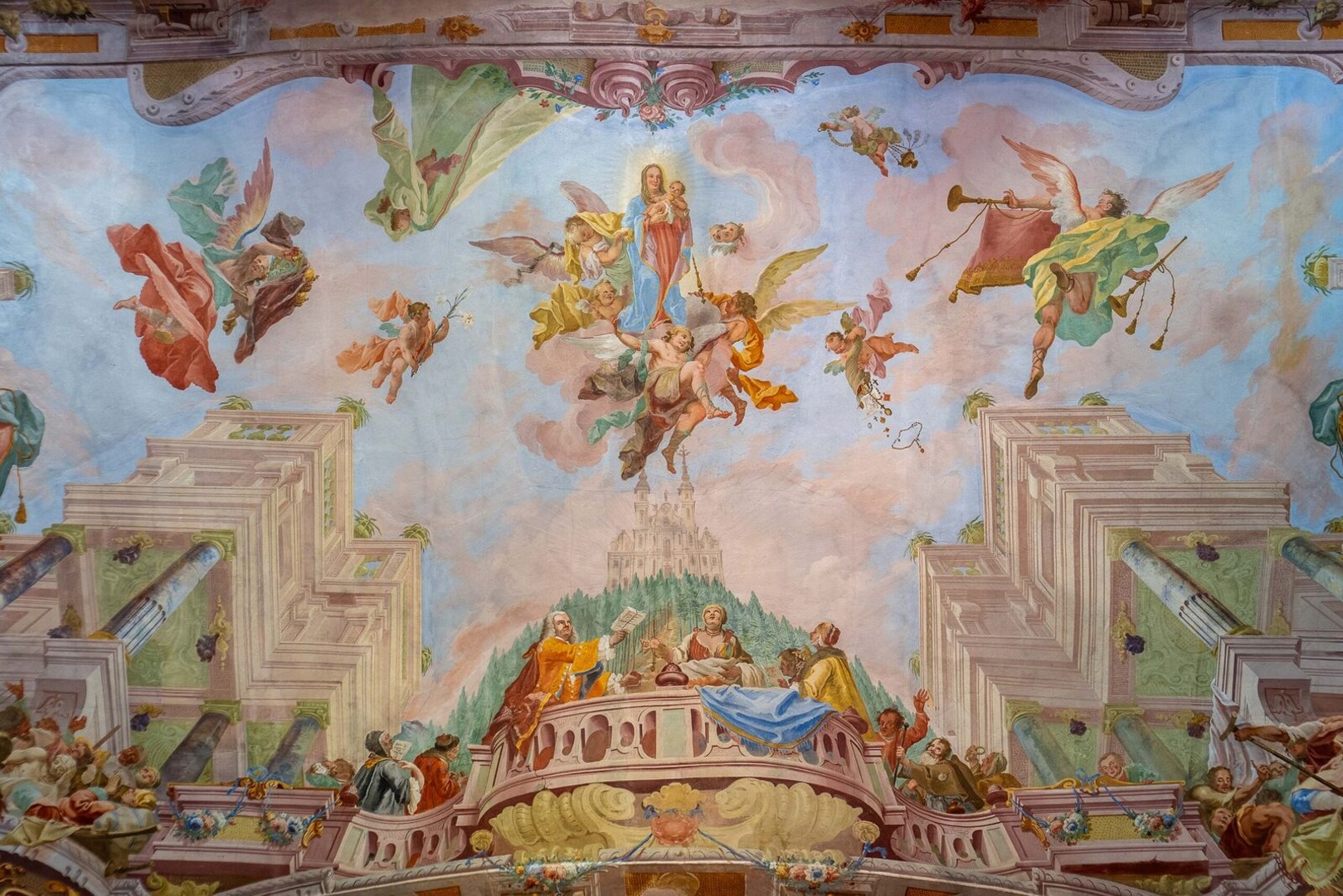
Donor fresco (also: founder fresco) Donor fresco (also: founder fresco)Location: Eastern part of the basilica, on the first floor, behind the statue of grace Dating: 1747 Material/Type: Ceiling fresco in mock architecture with a foreshortened bottom view Artist/Manufacturer: Johann Baptist Scheidt The founder's fresco (also founder's fresco) was painted in 1747 by Johann Baptist Scheidt in mock architecture with a foreshortened bottom view. It shows the founder Franz Kaspar Conduzzi (also: Contuzzi) standing with his wife on the parapet of a balcony and presenting the donor's letter to the Mother of God. Only accessible during guided tours.Read more Statue of Grace (Our Lady) Statue of Grace (Our Lady)Location: Came to Mariatrost via the Anna Chapel (former castle chapel); venerated today in the center of the basilica Dating: approx. 1460 (Gothic), 1695 Baroque Material / type: Gothic statue of the Virgin Mary, reworked in baroque style (“ver-baroqueized”) in 1695 The Gothic statue of the Virgin Mary dates from around 1460 and was reworked in Baroque style in 1695. According to legend, Johann Maximilian von Wilfersdorf discovered the statue in a monastery cell in Rein Abbey and asked the abbot to give it to him; This is how she got to Mariatrost via the Anna Chapel. She is at the center of the pilgrimage.Read more Crypt (Crypts of the Basilica) Crypt (Crypts of the Basilica)Location: Under the floor of the basilica (three crypt rooms: front and back crypt) Dating: 18th century (publicly accessible until 1895) Material/Type: Three crypts under the church floor Under the floor of the basilica there are three crypts with a total of 39 people buried, including Pauline monks. The Graz historian Stadl and his family lie in the front crypt; The rear crypt is the burial place of the Paulines with 34 coffins. In addition, the long-unknown grave of a composer was discovered.Read more Organ and remote control Organ and remote controlLocation: Fernwerk in the attic of the basilica; Main organ in the church Dating: previous organ from 1920; Fernwerk has been unplayable since 1941, restored in 2021 Material/Type: Organ with remote control (effects register) Artist / manufacturer: Drago Lukman (organ builder, restoration 2021) The remote control is in the attic; The sound enters the church through a hatch in the dome, creating a “heavenly” sound. It is a remnant of the previous organ from 1920. It was no longer intact from 1941 until the restoration in 2021 by Drago Lukman. It is controlled via the third manual of the main organ.Read more Lourdes Chapel (Lourdes Grotto) Lourdes Chapel (Lourdes Grotto)Location: Under the south tower of the basilica Dating: Redesign, rededication March 2023 Material/Type: Chapel/grotto, redesigned Artist / manufacturer: DI Ulrike Riegler (architect, Graz) The Lourdes Chapel under the south tower of the basilica is considered a “place of strength”. It was redesigned, renovated, enlarged and re-inaugurated in March 2023 by the Graz architect DI Ulrike Riegler. To this day, believers hang up plaques of supplication and gratitude for health and healing of illnesses.Read more
StoryFounding legend of the pilgrimageRead more dedicationdedicationRead more Renovations & extensionsRenovations & extensionsRead more Special storySpecial storyRead more
Donor fresco (also: founder fresco)

Donor fresco (also: founder fresco)

Location: Eastern part of the basilica, on the first floor, behind the statue of grace
Dating: 1747
Material/Type: Ceiling fresco in mock architecture with a foreshortened bottom view
Artist/Manufacturer: Johann Baptist Scheidt
The founder's fresco (also founder's fresco) was painted in 1747 by Johann Baptist Scheidt in mock architecture with a foreshortened bottom view. It shows the founder Franz Kaspar Conduzzi (also: Contuzzi) standing with his wife on the parapet of a balcony and presenting the donor's letter to the Mother of God. Only accessible during guided tours.
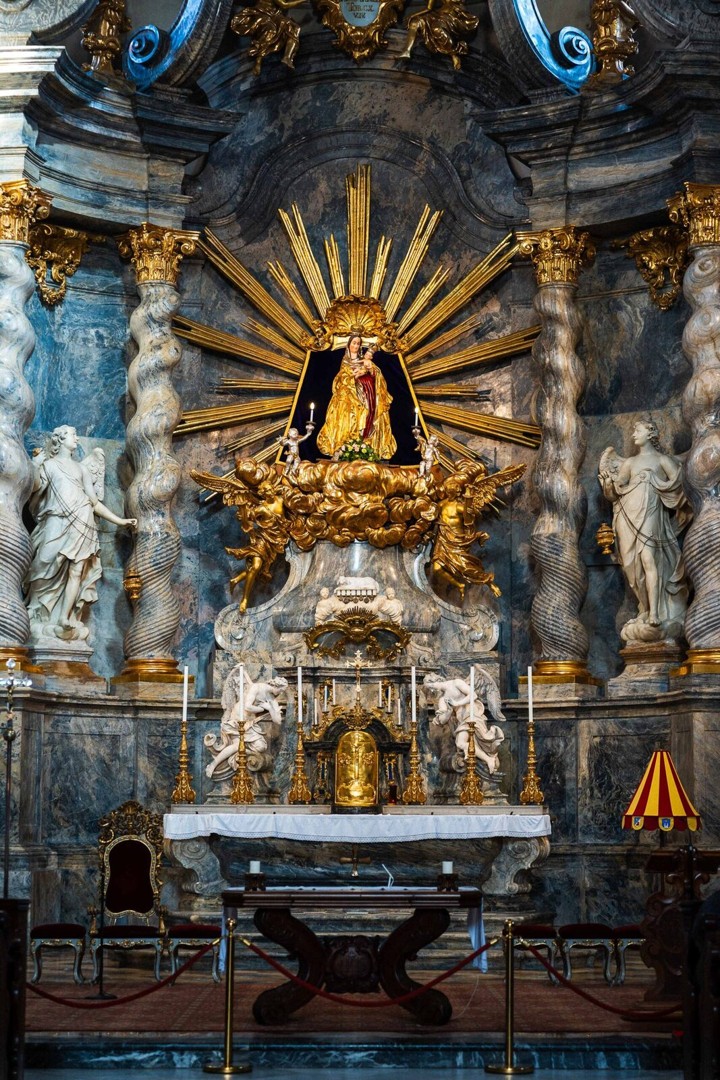
Statue of Grace (Our Lady)

Statue of Grace (Our Lady)

Location: Came to Mariatrost via the Anna Chapel (former castle chapel); venerated today in the center of the basilica
Dating: approx. 1460 (Gothic), 1695 Baroque
Material / type: Gothic statue of the Virgin Mary, reworked in baroque style (“ver-baroqueized”) in 1695
The Gothic statue of the Virgin Mary dates from around 1460 and was reworked in Baroque style in 1695. According to legend, Johann Maximilian von Wilfersdorf discovered the statue in a monastery cell in Rein Abbey and asked the abbot to give it to him; This is how she got to Mariatrost via the Anna Chapel. She is at the center of the pilgrimage.
Crypt (Crypts of the Basilica)

Crypt (Crypts of the Basilica)

Location: Under the floor of the basilica (three crypt rooms: front and back crypt)
Dating: 18th century (publicly accessible until 1895)
Material/Type: Three crypts under the church floor
Under the floor of the basilica there are three crypts with a total of 39 people buried, including Pauline monks. The Graz historian Stadl and his family lie in the front crypt; The rear crypt is the burial place of the Paulines with 34 coffins. In addition, the long-unknown grave of a composer was discovered.
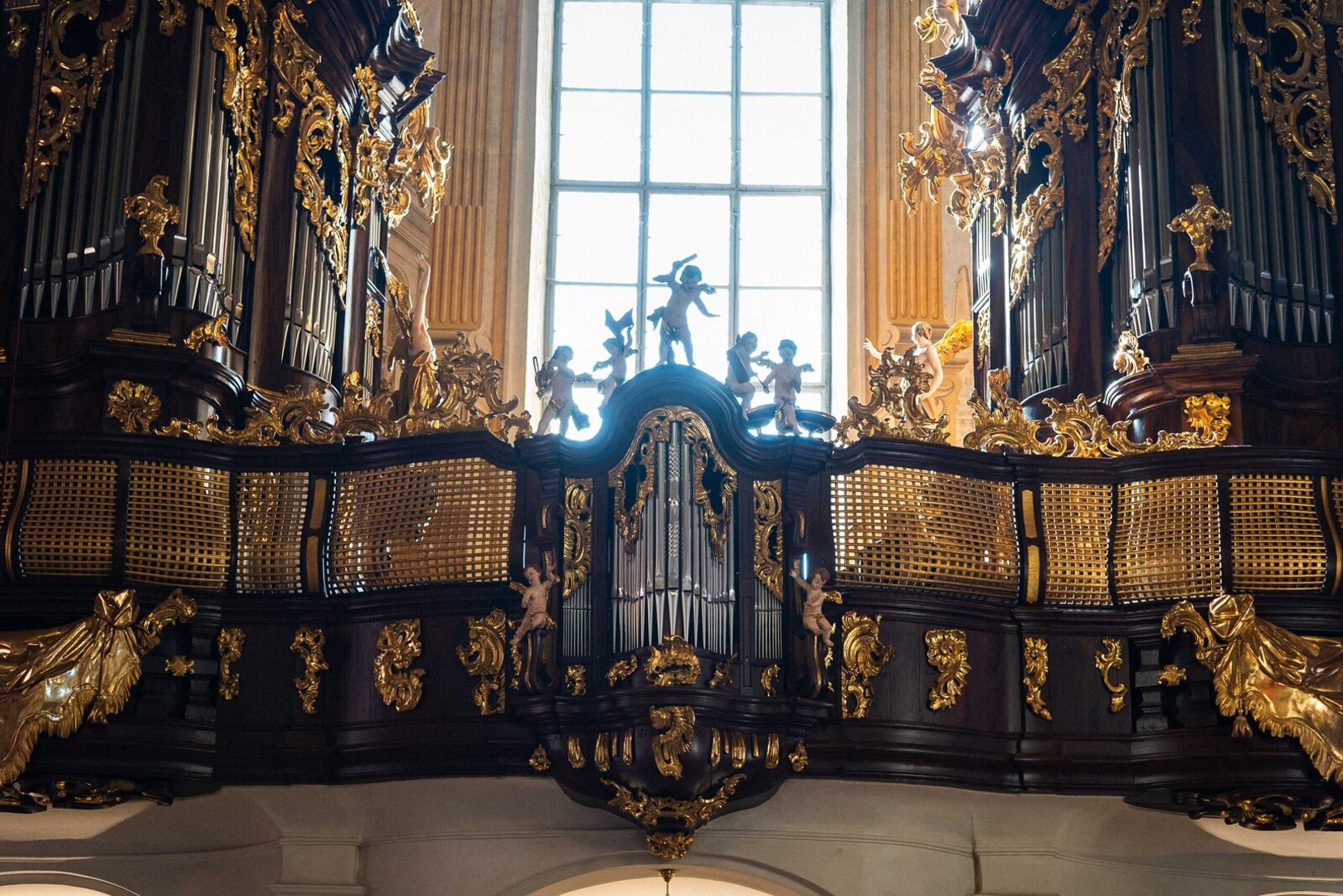
Organ and remote control

Organ and remote control

Location: Fernwerk in the attic of the basilica; Main organ in the church
Dating: previous organ from 1920; Fernwerk has been unplayable since 1941, restored in 2021
Material/Type: Organ with remote control (effects register)
Artist / manufacturer: Drago Lukman (organ builder, restoration 2021)
The remote control is in the attic; The sound enters the church through a hatch in the dome, creating a “heavenly” sound. It is a remnant of the previous organ from 1920. It was no longer intact from 1941 until the restoration in 2021 by Drago Lukman. It is controlled via the third manual of the main organ.
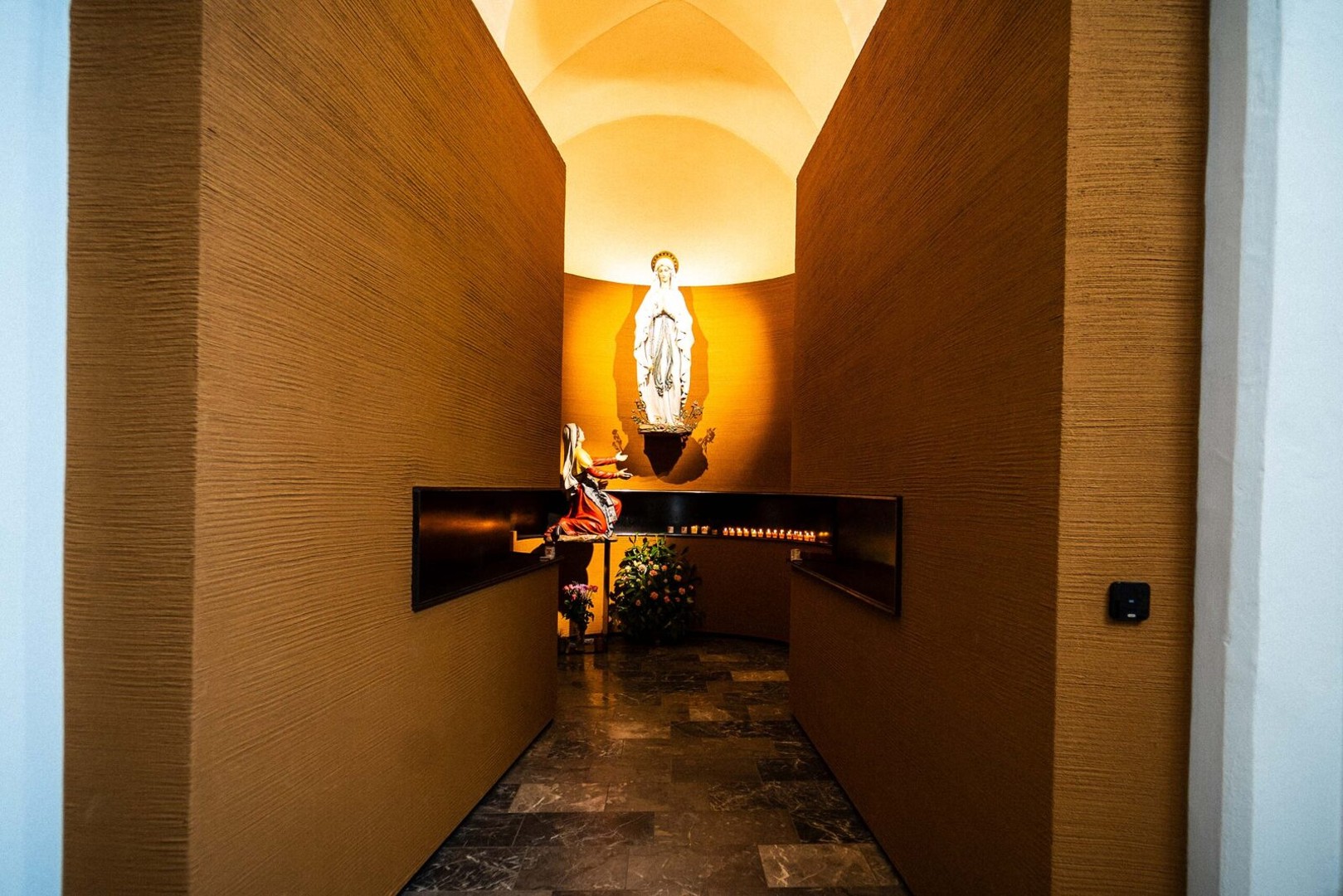
Lourdes Chapel (Lourdes Grotto)

Lourdes Chapel (Lourdes Grotto)

Location: Under the south tower of the basilica
Dating: Redesign, rededication March 2023
Material/Type: Chapel/grotto, redesigned
Artist / manufacturer: DI Ulrike Riegler (architect, Graz)
The Lourdes Chapel under the south tower of the basilica is considered a “place of strength”. It was redesigned, renovated, enlarged and re-inaugurated in March 2023 by the Graz architect DI Ulrike Riegler. To this day, believers hang up plaques of supplication and gratitude for health and healing of illnesses.
Story

Story

Founding legend of the pilgrimage

A pilgrim is said to have reported that the Mother of God wanted to be worshiped on this mountain (the so-called Purberg) - this is how the Mariatrost pilgrimage site came into being, according to tradition.

dedication

dedication

Dedicated to Mary, Mother of God; At the center of the pilgrimage is the statue of grace (Gothic, around 1460, reworked in Baroque style in 1695).

Renovations & extensions

Renovations & extensions

1714: laying of the foundation stone; The entire construction period was 143 years, with the first trade fairs taking place after just 30 years
1846: The Franciscans come to Mariatrost (initiated by Father Johannes Dorner) and stay for around 150 years
1980s: Major renovation/refurbishment
1997/98: Transfer of the facility to the Diocese of Graz-Seckau; The first diocesan priest is Pastor Bierbauer
1999: Elevation to Papal Basilica
2021: Restoration of the organ telework by Drago Lukman after it had not been intact since 1941
Since 2019: Ongoing renovation of the basilica

Special story

Special story

Legend: Johann Maximilian von Wilfersdorf, owner of the nearby castle, visited his brother in Rein Abbey, saw the beautiful statue of the Virgin Mary in a monastery cell and asked the abbot to give it to him - so the statue came to Mariatrost via the Annakapelle (former castle chapel).
Pilgrim legend: A pilgrim is said to have reported that the Mother of God wanted to be worshiped on this mountain, which led to the creation of the pilgrimage site.
The long-unknown grave of a composer was discovered in the crypt ('secret composer').
The tunnel in the mountain below the church served the population as protection from bombs during the war; Parts are now protected as a bat sanctuary.
Mariatrost was the traditional place of confirmation for many Styrian children (e.g. from the area around Weiz).
To this day, the believers' petition and thank you tablets hang in the Lourdes Chapel.
The ringing of the basilica's bells was professionally recorded by Michael Rexeis.

Audio guide

Origin & History1:38
The statue of grace0:56
The donor fresco0:55
Organ and remote control0:51
The crypt0:56
The Lourdes Chapel0:50

Videos

Discover Mariatrost · Mariatrost Basilica

Sign in