Bärnbach · St. Barbara

Bärnbach, Austria

About this church

Parish church · designed by Friedensreich Hundertwasser

Significance: St. Barbara is the only sacred church in the world designed by Friedensreich Hundertwasser and the landmark of Bärnbach.

Special features: Art-historically important · Regionally important · Religiously important · Pilgrimage destination · Architecturally special · Nationally known

Accessibility: Not specified

Guided tours: Not specified

Highlights
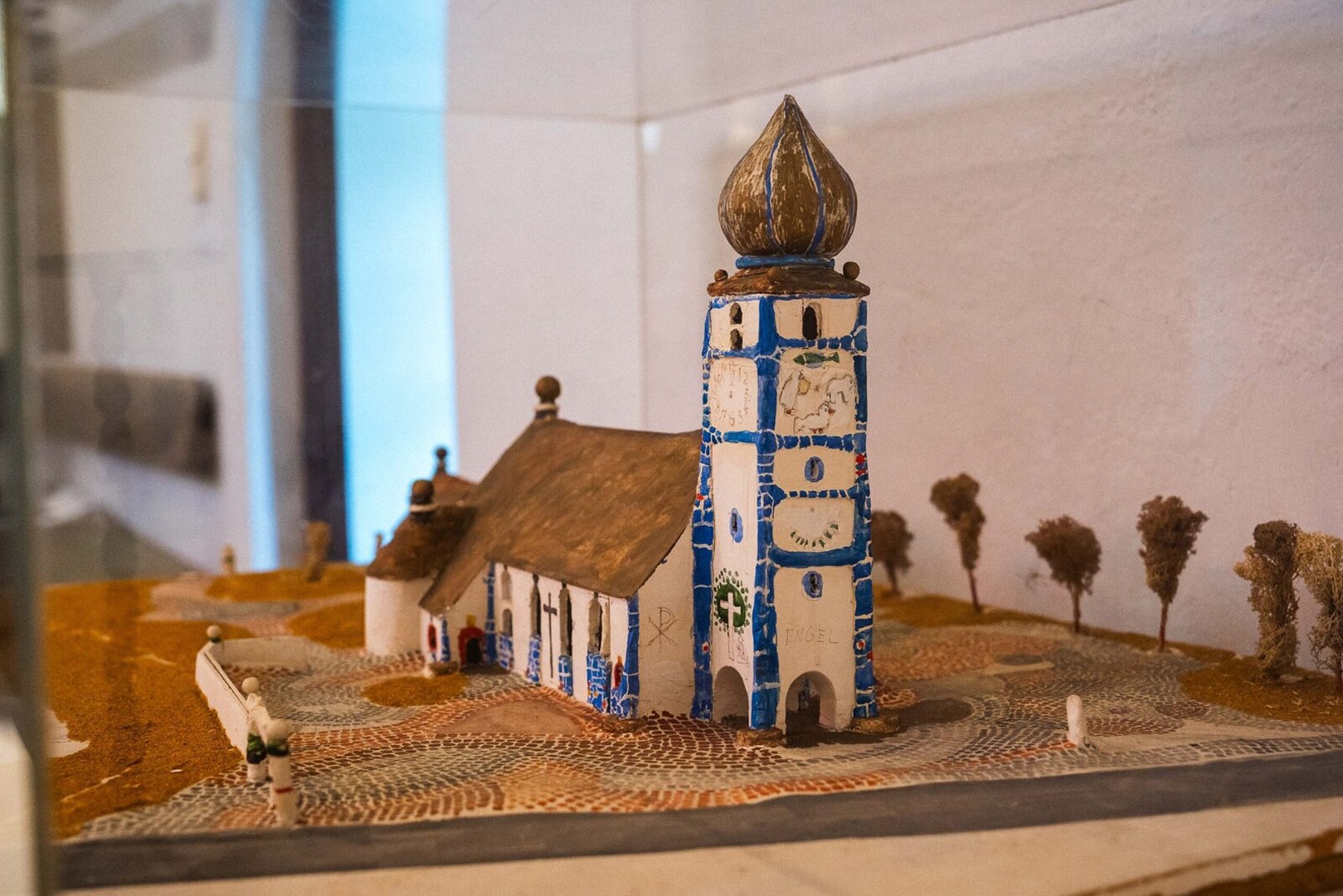
The Hundertwasser facade and tower The Hundertwasser facade and towerLocation: Exterior facade and church tower Dating: 1987–1988 Material / Type: Ceramic mosaics, colored plaster surfaces, colorful tiled roof with eight gold-plated balls, gold-plated tower onion made of copper sheet (36 m high tower) Artist / manufacturer: Friedensreich Hundertwasser (design), Manfred Fuchsbichler (architect) In 1987/88, Hundertwasser and architect Manfred Fuchsbichler completely redesigned the originally simple facade: ceramic mosaics, colored plaster surfaces and rounded structures at the corners break up the strict architecture. The 36 meter high tower has a gold-plated copper onion and the colorful tiled roof has eight gold-plated balls.Read more The twelve ecumenical archways The twelve ecumenical archwaysLocation: Processional path around the church Dating: 1987–1991 Material/Type: Concrete columns with ceramic elements, grassy roofs Artist/Manufacturer: Friedensreich Hundertwasser Twelve archways along the irregularly paved procession path represent the major world religions and world views - from Christianity to Islam, Judaism, Hinduism and Buddhism to the “Gate of Non-Believers”. Hundertwasser saw it as a gesture of ecumenism, tolerance and togetherness.Read more The halo behind the altar The halo behind the altarLocation: choir room, behind the altar Dating: 1987/1988 Material/Type: Marble and Ceramic, 21 Rays Artist/Manufacturer: Friedensreich Hundertwasser Behind the altar, Hundertwasser personally designed a halo of 21 rays in marble and ceramic - one of his few personally executed works in the interior of the church.Read more The baptismal niche with a glass spiral The baptismal niche with a glass spiralLocation: baptismal niche in the nave Dating: 1987/1988 Material/Type: Stained Glass, Round Window Artist/Manufacturer: Friedensreich Hundertwasser Above the historic baptismal font, Hundertwasser designed a round window with a colorful glass spiral and a cross - one of the few elements he personally executed inside the church.Read more Folk altar and ambo Folk altar and amboLocation: choir room Dating: 1987/1988 Material / Type: Glass cube with twelve different colored layers of earth (quartz sand, brown coal, earth) Artist/Manufacturer: Erwin Talker The people's altar and ambo were designed by Erwin Talker from glass blocks with twelve different colored layers of earth - from quartz sand, brown coal and earth samples that come from Israel, the Vatican, Kiev and Dachau, among others, and symbolically connect the church with the whole world.Read more The Way of the Cross The Way of the CrossLocation: Longhouse Dating: consecrated February 17, 1989 Material/Type: 14 paintings on wooden panels, golden frames Artist/Manufacturer: Rudolf Pointner Rudolf Pointner's fourteen-part Way of the Cross was consecrated on February 17, 1989. The stations are painted on wooden panels and framed in gold.Read more The organ The organLocation: Choir (gallery) Dating: 1994 Material/Type: Wood and Metal; Rückpositiv, two manuals, pedal, 21 registers, 1340 pipes, mechanical slider drawers Artist/Manufacturer: Rieger Orgelbau Today's organ was built in 1994 by the Rieger Orgelbau company and consecrated on September 4, 1994. It has a Rückpositiv, two manuals, pedal, 21 registers and 1340 pipes with mechanical sliding chests.Read more
StoryFrom the parish church to the Hundertwasser ChurchRead more dedicationdedicationRead more Renovations & extensionsRenovations & extensionsRead more Special storySpecial storyRead more
The Hundertwasser facade and tower

The Hundertwasser facade and tower

Location: Exterior facade and church tower
Dating: 1987–1988
Material / Type: Ceramic mosaics, colored plaster surfaces, colorful tiled roof with eight gold-plated balls, gold-plated tower onion made of copper sheet (36 m high tower)
Artist / manufacturer: Friedensreich Hundertwasser (design), Manfred Fuchsbichler (architect)
In 1987/88, Hundertwasser and architect Manfred Fuchsbichler completely redesigned the originally simple facade: ceramic mosaics, colored plaster surfaces and rounded structures at the corners break up the strict architecture. The 36 meter high tower has a gold-plated copper onion and the colorful tiled roof has eight gold-plated balls.
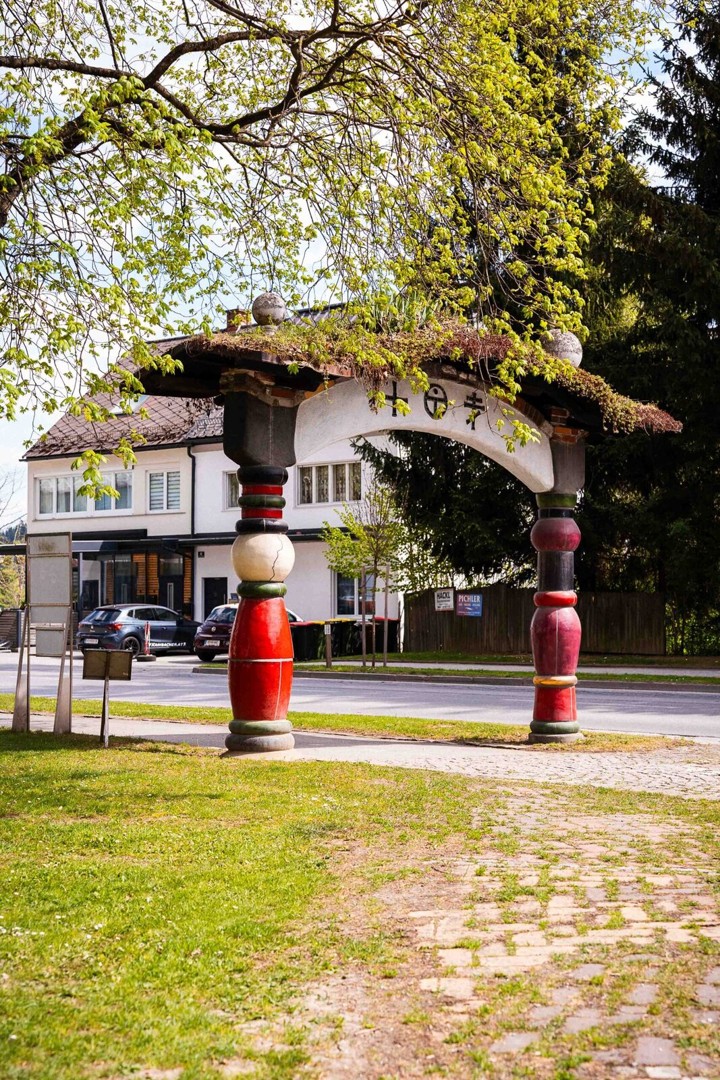
The twelve ecumenical archways

The twelve ecumenical archways

Location: Processional path around the church
Dating: 1987–1991
Material/Type: Concrete columns with ceramic elements, grassy roofs
Artist/Manufacturer: Friedensreich Hundertwasser
Twelve archways along the irregularly paved procession path represent the major world religions and world views - from Christianity to Islam, Judaism, Hinduism and Buddhism to the “Gate of Non-Believers”. Hundertwasser saw it as a gesture of ecumenism, tolerance and togetherness.
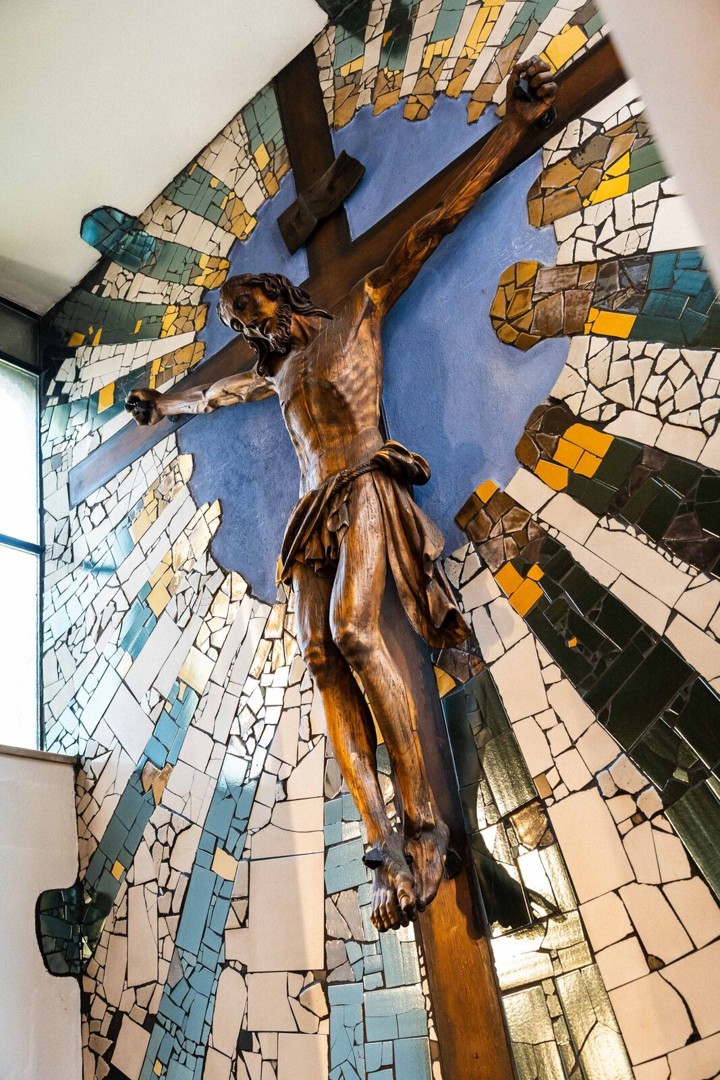
The halo behind the altar

The halo behind the altar

Location: choir room, behind the altar
Dating: 1987/1988
Material/Type: Marble and Ceramic, 21 Rays
Artist/Manufacturer: Friedensreich Hundertwasser
Behind the altar, Hundertwasser personally designed a halo of 21 rays in marble and ceramic - one of his few personally executed works in the interior of the church.
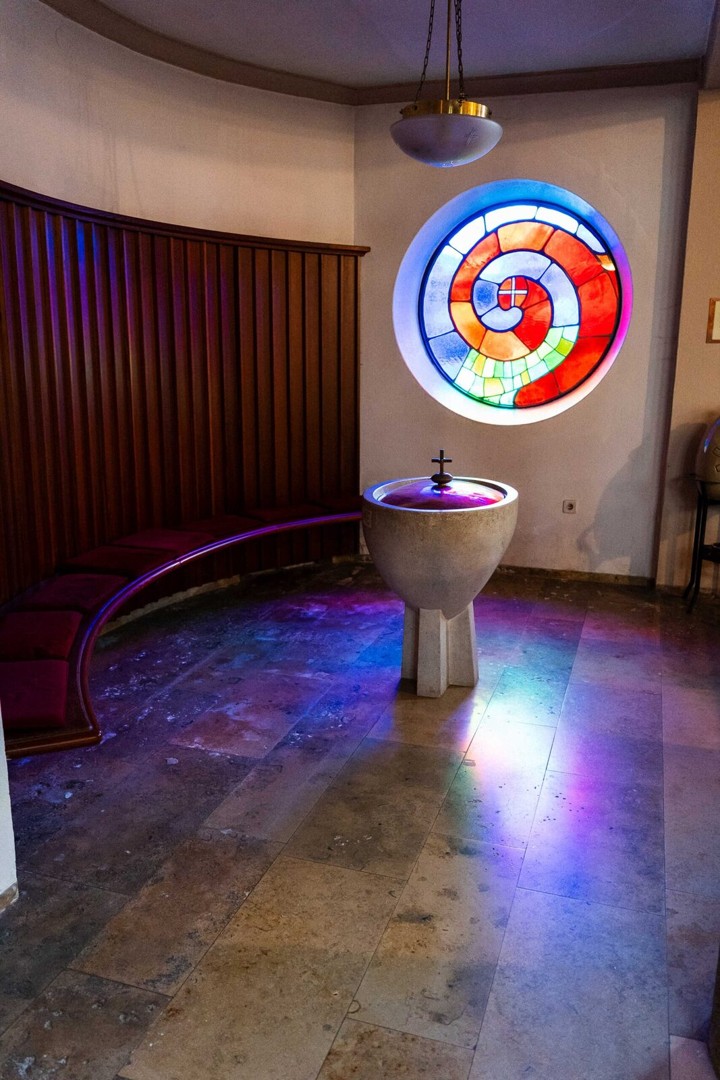
The baptismal niche with a glass spiral

The baptismal niche with a glass spiral

Location: baptismal niche in the nave
Dating: 1987/1988
Material/Type: Stained Glass, Round Window
Artist/Manufacturer: Friedensreich Hundertwasser
Above the historic baptismal font, Hundertwasser designed a round window with a colorful glass spiral and a cross - one of the few elements he personally executed inside the church.
Folk altar and ambo

Folk altar and ambo

Location: choir room
Dating: 1987/1988
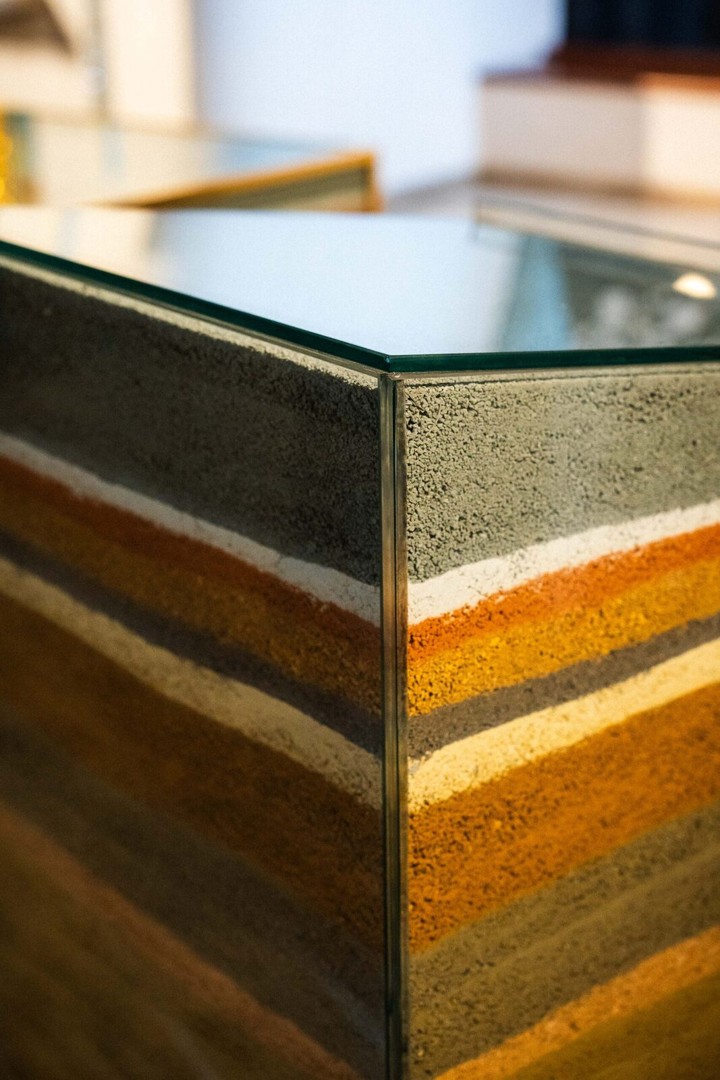
Material / Type: Glass cube with twelve different colored layers of earth (quartz sand, brown coal, earth)
Artist/Manufacturer: Erwin Talker
The people's altar and ambo were designed by Erwin Talker from glass blocks with twelve different colored layers of earth - from quartz sand, brown coal and earth samples that come from Israel, the Vatican, Kiev and Dachau, among others, and symbolically connect the church with the whole world.
The Way of the Cross

The Way of the Cross

Location: Longhouse
Dating: consecrated February 17, 1989
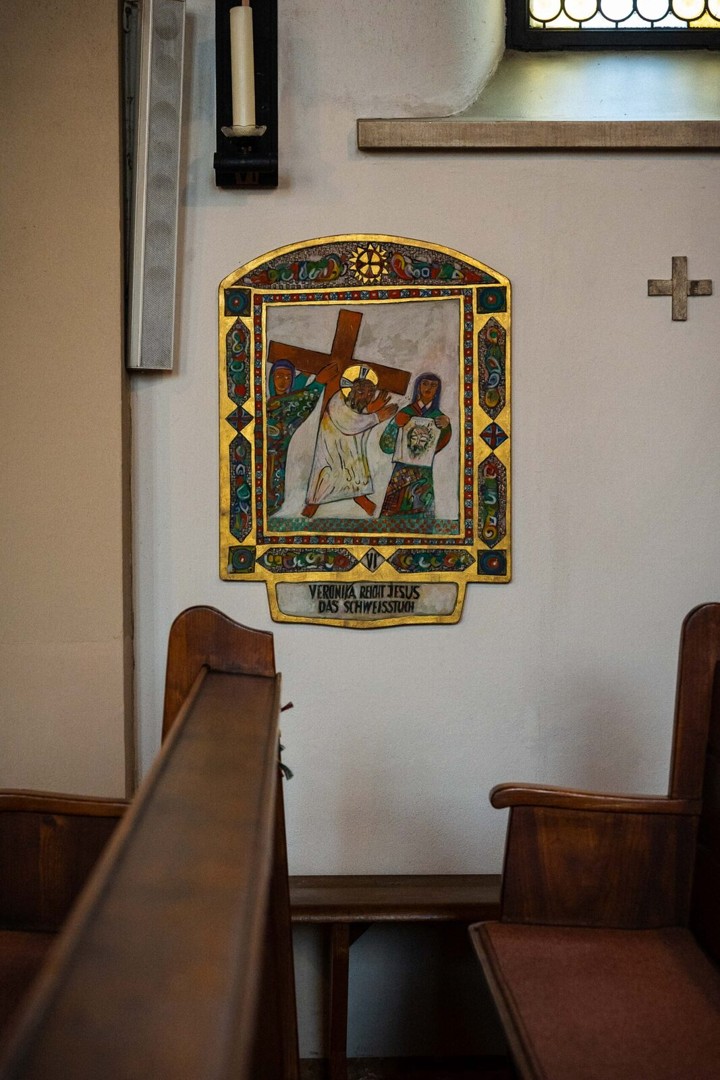
Material/Type: 14 paintings on wooden panels, golden frames
Artist/Manufacturer: Rudolf Pointner
Rudolf Pointner's fourteen-part Way of the Cross was consecrated on February 17, 1989. The stations are painted on wooden panels and framed in gold.
The organ

The organ

Location: Choir (gallery)
Dating: 1994
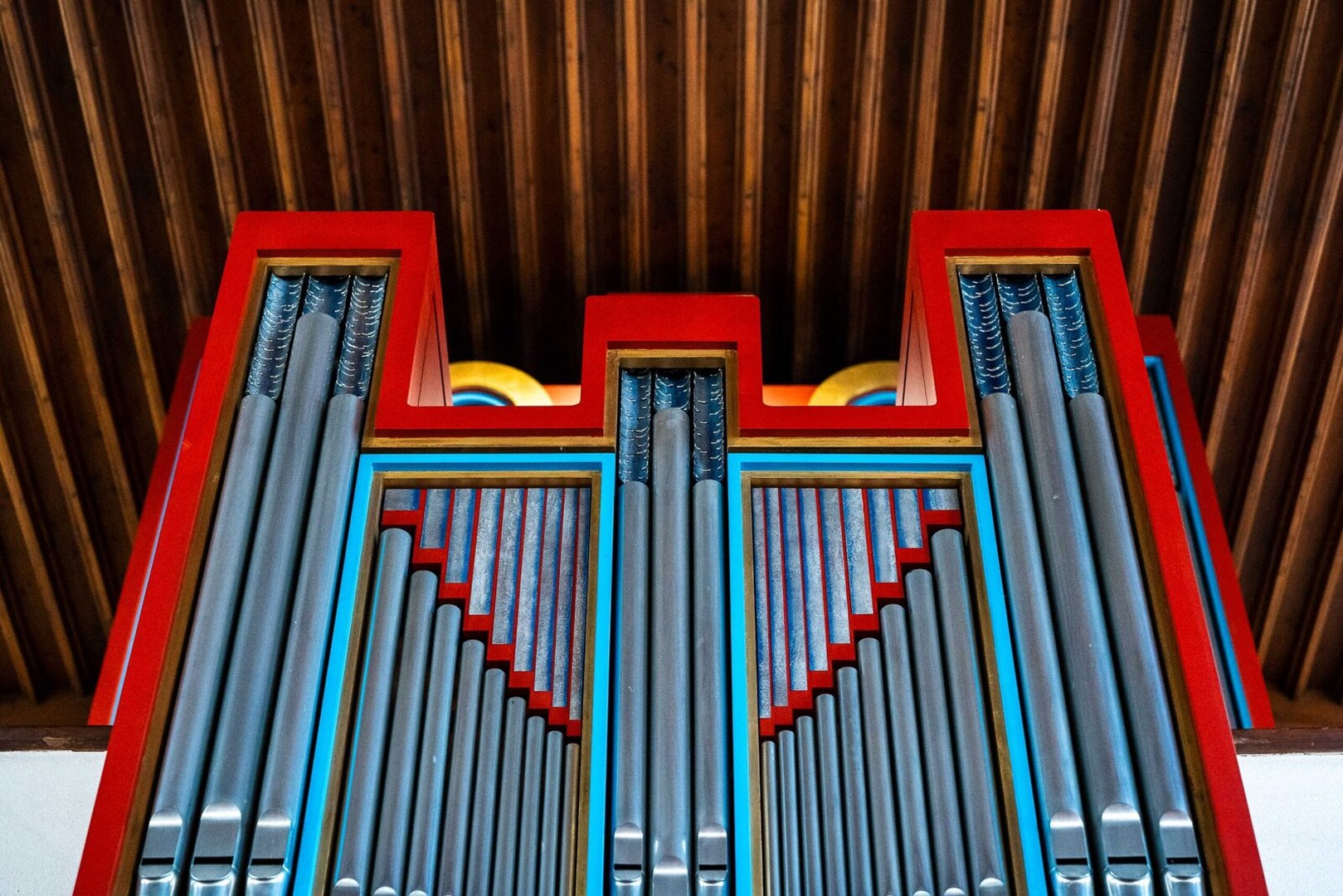
Material/Type: Wood and Metal; Rückpositiv, two manuals, pedal, 21 registers, 1340 pipes, mechanical slider drawers
Artist/Manufacturer: Rieger Orgelbau
Today's organ was built in 1994 by the Rieger Orgelbau company and consecrated on September 4, 1994. It has a Rückpositiv, two manuals, pedal, 21 registers and 1340 pipes with mechanical sliding chests.
Story

Story

From the parish church to the Hundertwasser Church

The Church of St. Barbara was built between 1948 and 1950 according to plans by architect Karl Lebwohl - the groundbreaking ceremony took place on October 21, 1948, and the blessing took place on May 21, 1950. On January 1, 1952, it was elevated to a parish church under the first pastor Franz Derler, and the church consecration took place on October 27, 1957.
In 1987/88, Friedensreich Hundertwasser fundamentally redesigned the church together with architect Manfred Fuchsbichler; Bishop Johann Weber carried out the new consecration on September 4, 1988 under Pastor Friedrich Zeck. In 2016, as part of a restoration, the eight balls and the tower onion were re-gilded under Pastor Winfried Lembacher.

dedication

dedication

The church is dedicated to Saint Barbara, whose feast day is celebrated on December 4th.

Renovations & extensions

Renovations & extensions

- 1948–1950: Construction of the church according to plans by architect Karl Lebwohl; Blessing on May 21, 1950.
- 1952: Elevation to parish church on January 1, 1952 under the first pastor Franz Derler.
- 1957: Church consecration on October 27, 1957.
- 1987–1988: Fundamental redesign by Friedensreich Hundertwasser with architect Manfred Fuchsbichler; Re-consecration on September 4, 1988 by Bishop Johann Weber, under Pastor Friedrich Zeck.
- 2016: Restoration: Re-gilding of the eight balls and the tower bulb (June–October 2016) under Pastor Winfried Lembacher.

Special story

Special story

- 1952: Opening/elevation to parish church under Pastor Franz Derler.
- October 12, 1987: Construction of the redesign by Friedensreich Hundertwasser begins.
- September 4, 1988: Re-consecration of the redesigned church by Bishop Johann Weber under Pastor Friedrich Zeck.
- February 17, 1989: Consecration of the 14-part Way of the Cross by Rudolf Pointner.
- June–October 2016: Restoration with re-gilding of the balls and the tower bulb under Pastor Winfried Lembacher.

Audio guide

Origin & History1:36
The Hundertwasser facade and tower1:16
The twelve ecumenical archways1:21
The halo behind the altar1:09
The baptismal niche with a glass spiral1:16
Folk altar and ambo1:16
The Way of the Cross1:24
The organ
The organ1:16

Sign in