Story
From the fortified castle to the pilgrimage church
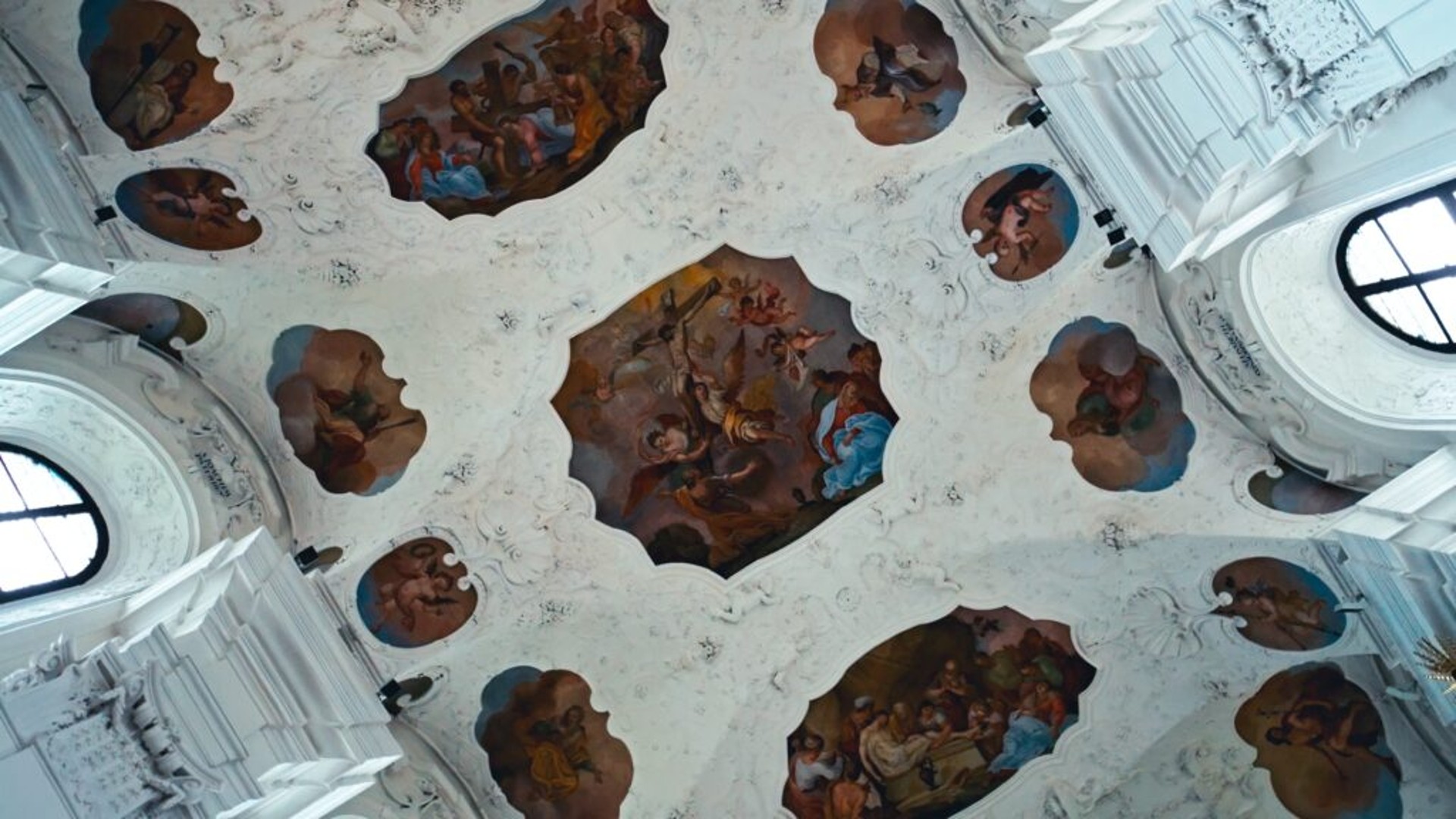
Where the Maria Freienstein pilgrimage church stands today, Freienstein Castle rose in the 11th or 12th century, built by the Aribons high above the Vordernbergertal. In 1527 it was pledged to Siegmund von Herberstein and subsequently fell into ruin.
According to legend, the former court jester Hans discovered a treasure of gold in the ruins - and it is said that this discovery made the later building of the church possible. In 1652, the Leoben Jesuit College acquired the Freienstein castle and estate and received archbishop's permission to convert the castle ruins into a pilgrimage church. Between 1660 and 1665, today's church was built on the foundations of the castle. It was consecrated in 1718.
In 1773 the Jesuit order was abolished and control fell to the state. Between 2008 and 2018, the entire facility was extensively renovated under project manager Norbert Pint - the Association of Friends of the Pilgrimage Church alone contributed 200,000 euros. In 2018, Archbishop Franz Lackner celebrated the mass at the end of the renovation together with Pastor Johannes Freitag and Mayor Anita Weinkogl.