Great regalia
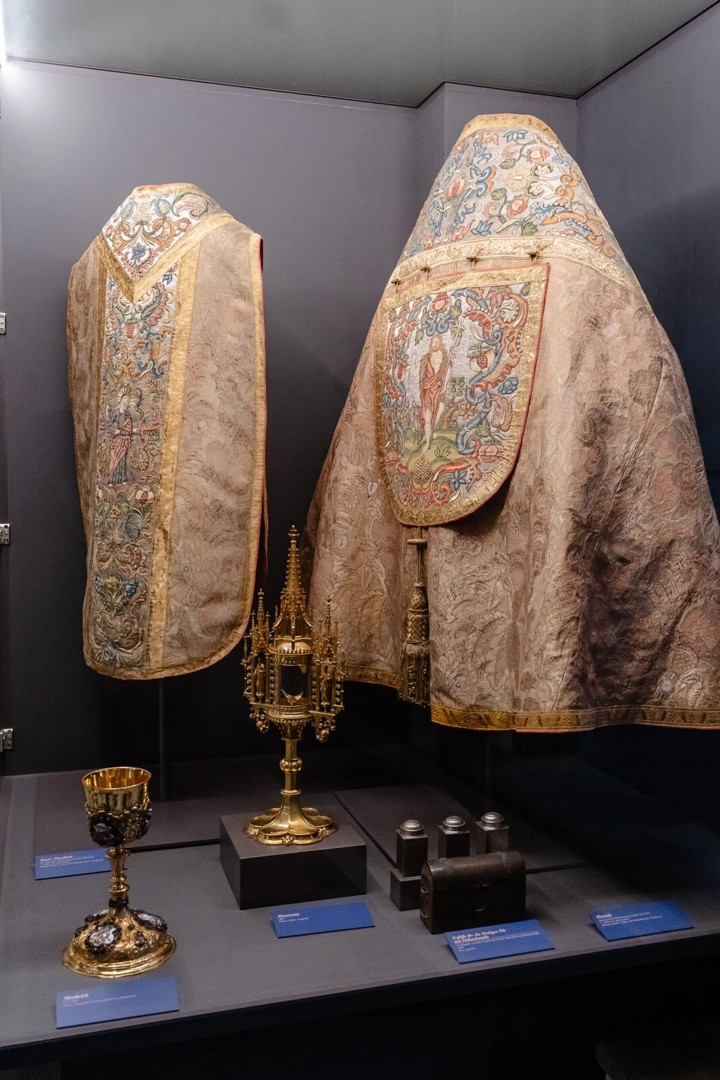
Location: Originally Göss Abbey, today in the MAK – Museum of Applied Arts, Vienna (not exhibited on site)
Dating: around 1260
Material/Type: Liturgical textile ensemble (chasuble, pluviale, dalmatic, tunic, antependium; silk embroidery on linen)
Artist/Manufacturer: Nuns of Göss Abbey, donated by Abbess Kunigunde II.
The “Gösser Ornat” is an almost completely preserved ensemble of Romanesque vestments and is considered unique in the Christian West. The dense silk embroidery makes the linen base disappear completely; The donor picture shows Kunigunde II and is one of the oldest surviving portraits of a female donor in European textile art. Sold to the MAK Vienna in 1911, the aim is always to return it on loan for exhibitions in Leoben.