High altar
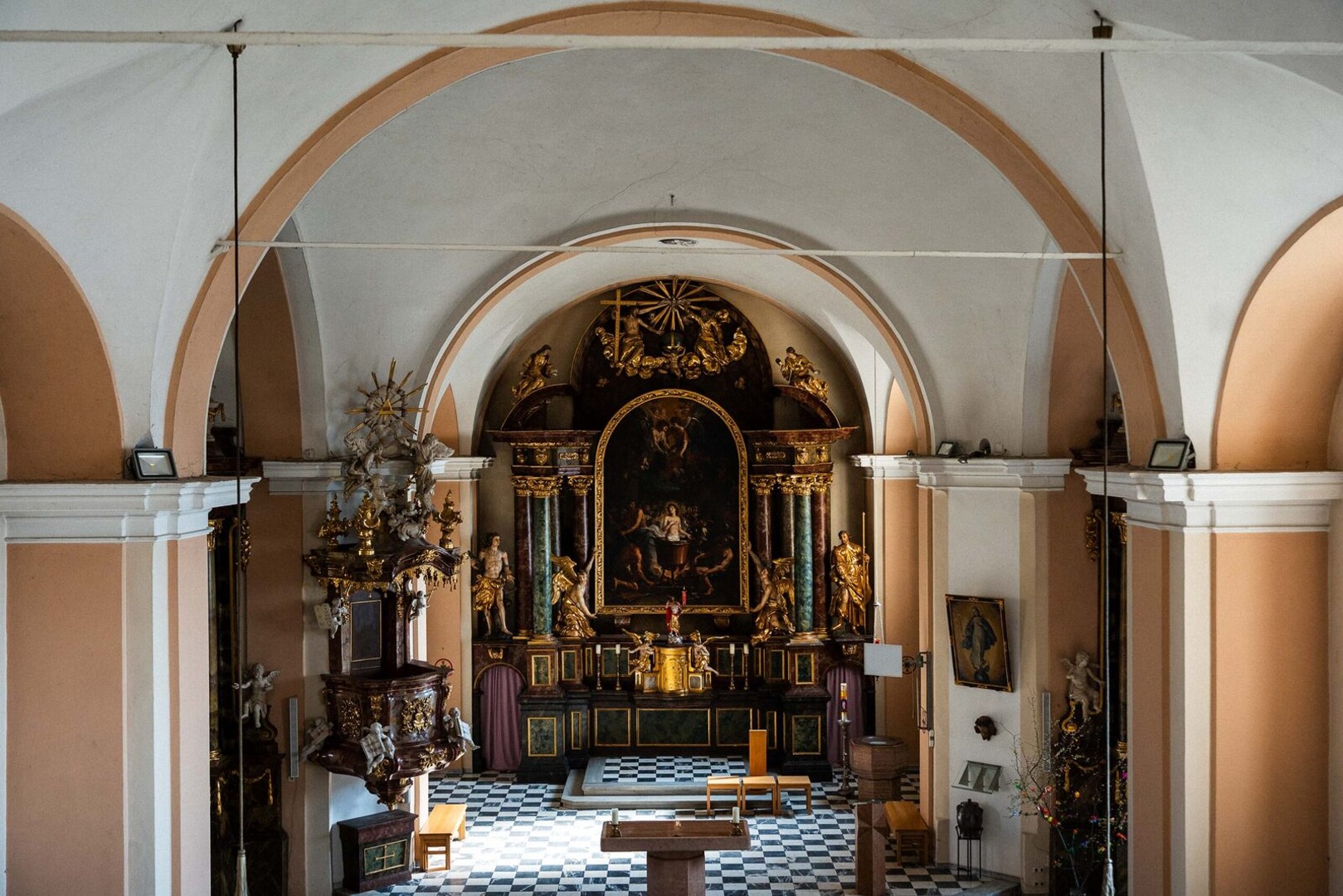
Location: Choir room (east)
Dating: around 1685 (altar painting signed and dated 1680)
Material/Type: Wood, marbled, Corinthian columns, acanthus decor
Artist / manufacturer: Andreas Marx (sculptor), Hans Adam Weissenkircher (painter), Philipp Jakob Straub (additions around 1745)
Foundation of Prince Johann Seyfried von Eggenberg, who held bailiwick rights over St. Veit. The altarpiece shows the martyrdom of St. Veit in the boiling oil cauldron and is the earliest confirmed work by the court painter Hans Adam Weissenkircher. The statues of the plague saints Sebastian and Rochus as well as Mary Magdalene and Barbara are by Andreas Marx. Around 1745, Philipp Jakob Straub added the kneeling angels and the Trinity group to the altarpiece.